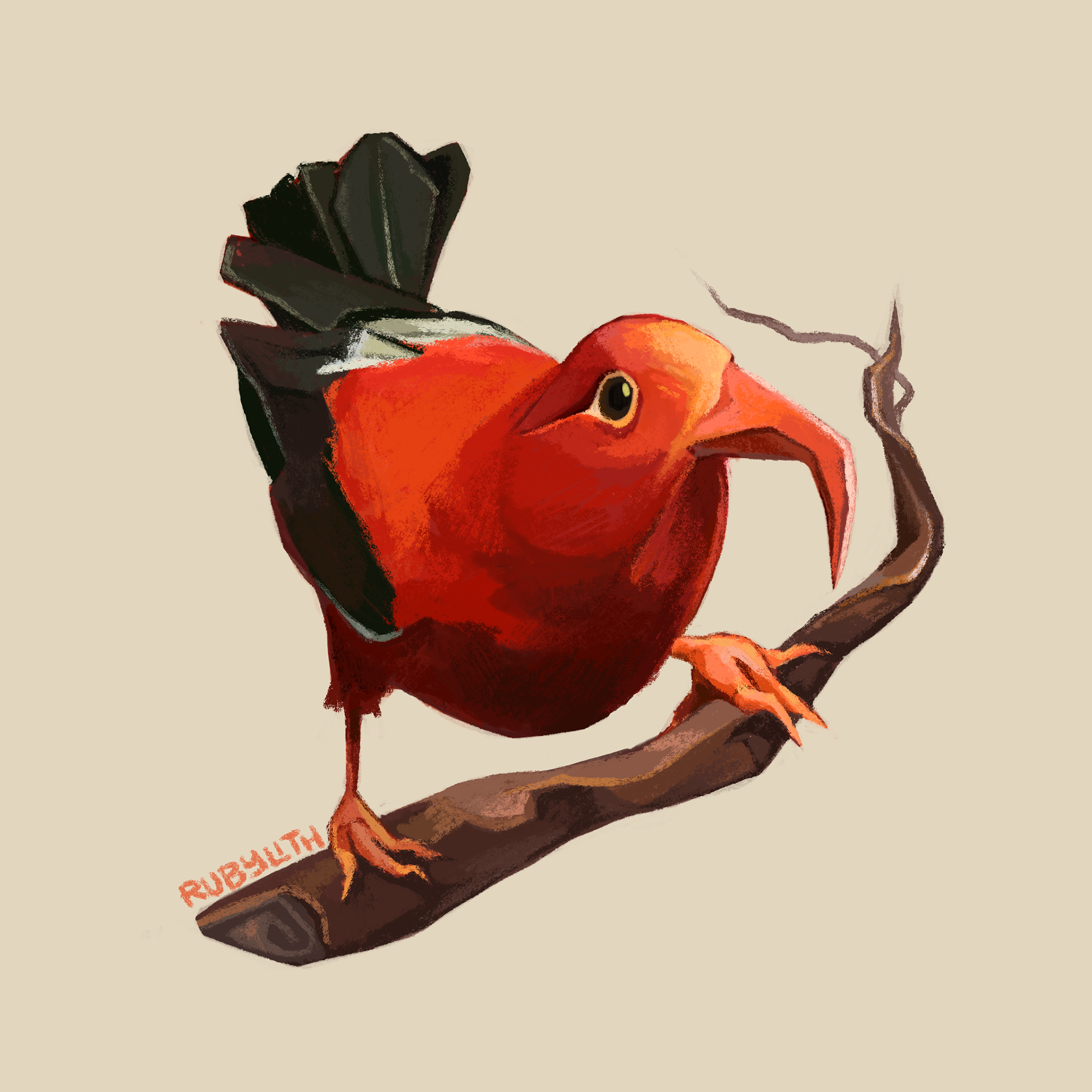
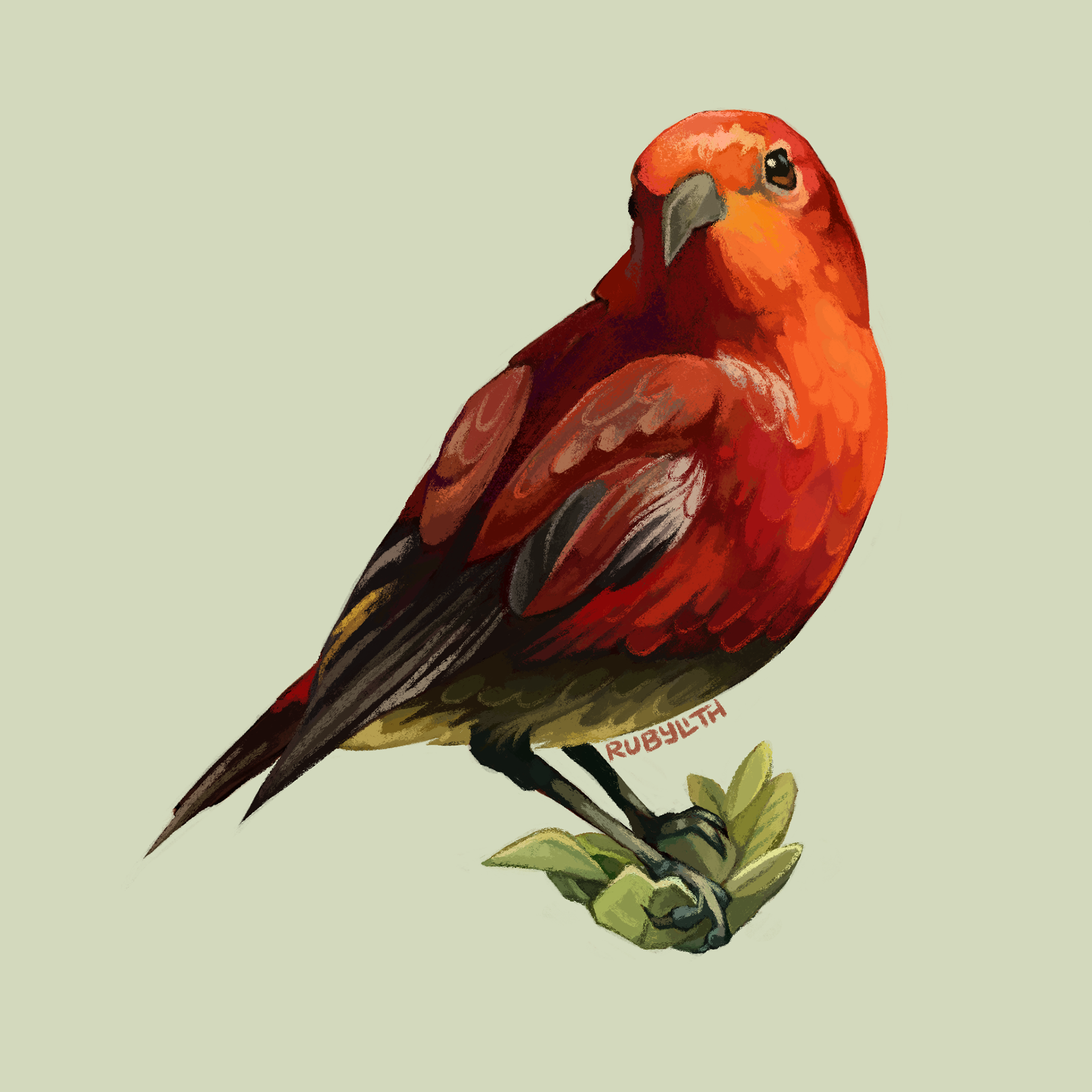
The ʻIʻiwi or scarlet honeycreeeper (Drepanis coccinea) is a distinctive red honeycreeper with a long curved beak. It is a popular symbol of Hawaiʻi. Like many Honeycreepers, their population is highly endangered by a combination of avian malaria, invasive species, and habitat loss: they have lost over 90% of their historic range.
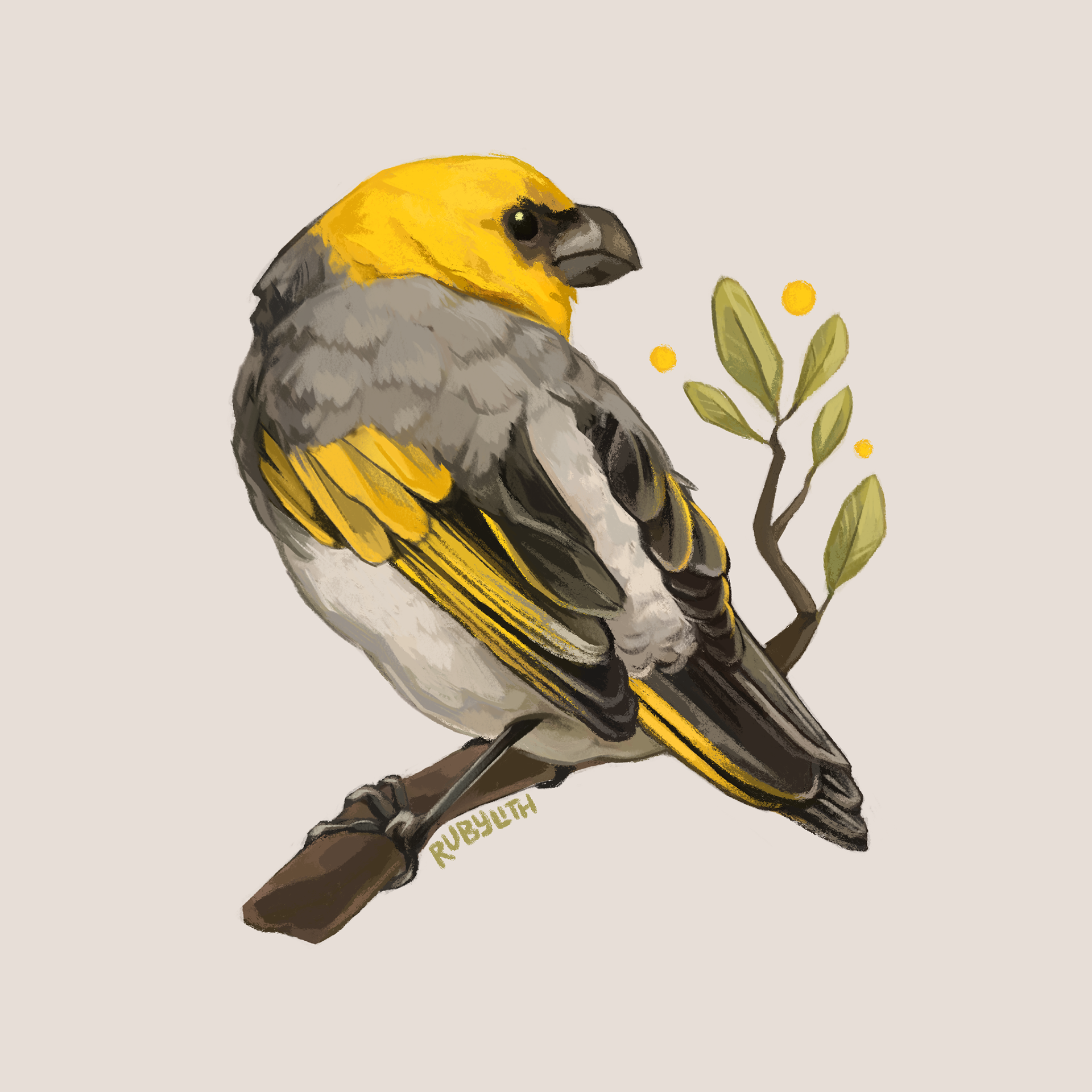
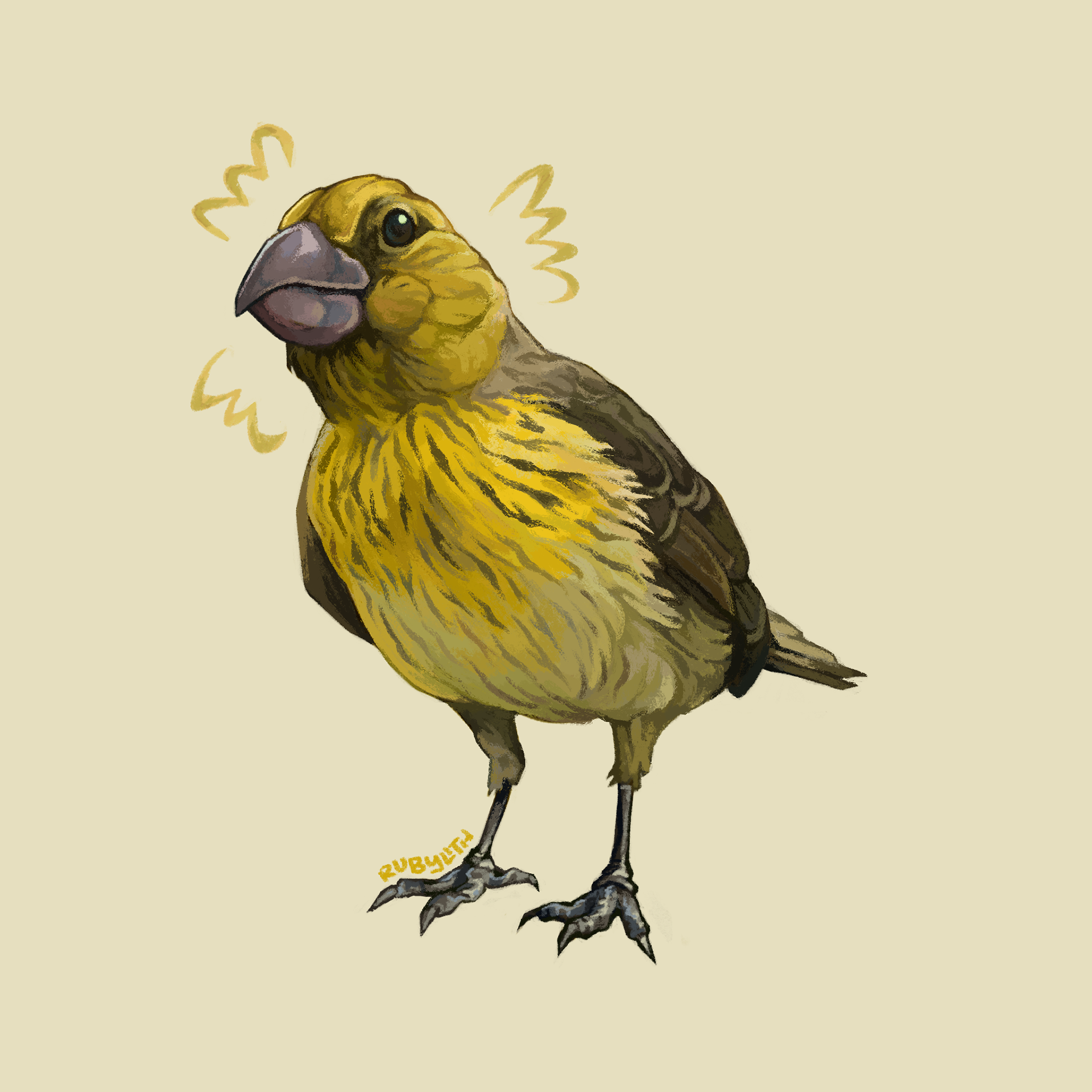
The Palila (Loxioides bailleui) is a finch-billed Hawaiian Honeycreeper, primarily found on the western slope of Mauna Kea, though its historic range was much larger. Like many Honeycreepers, their population is highly endangered by a combination of avian malaria and habitat loss.
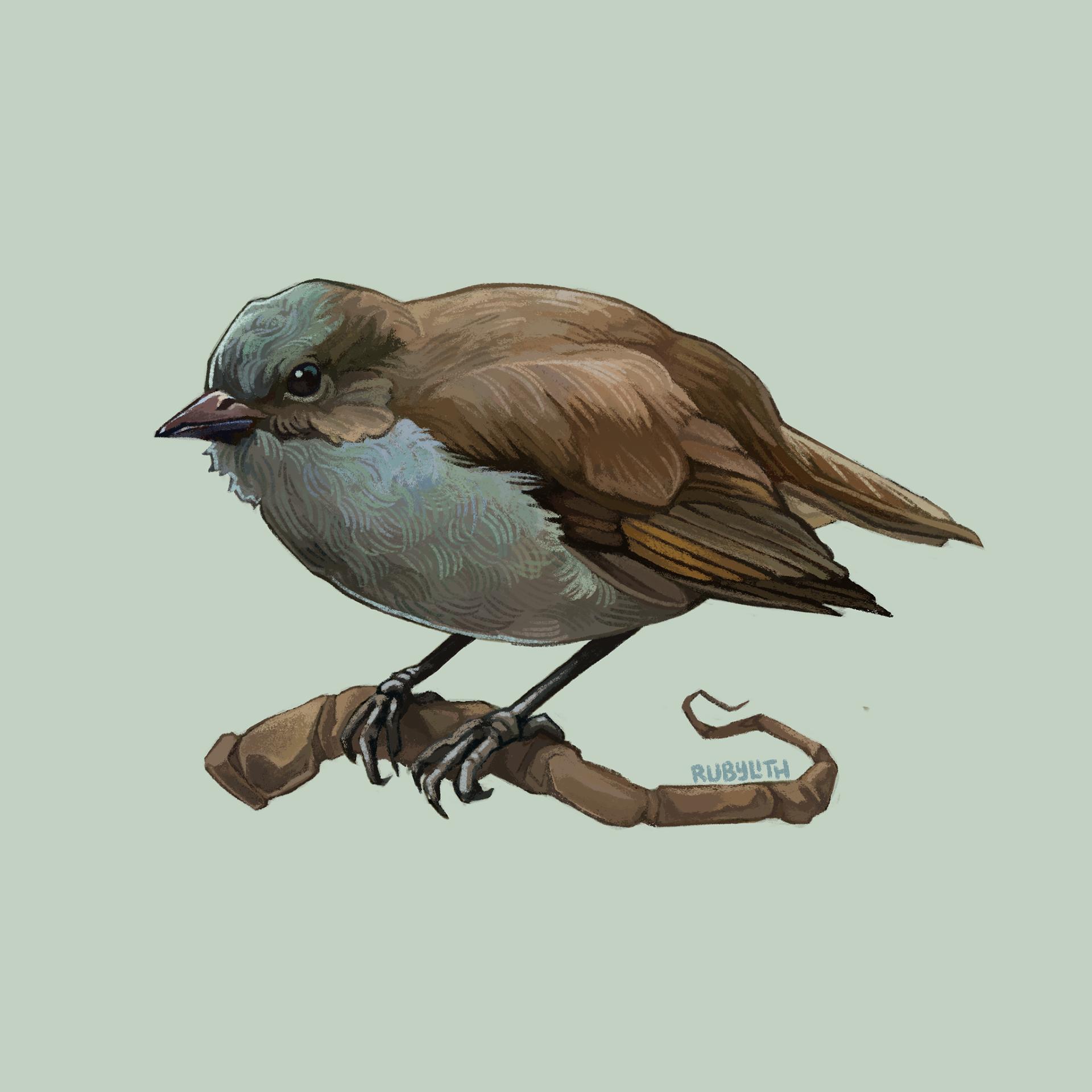
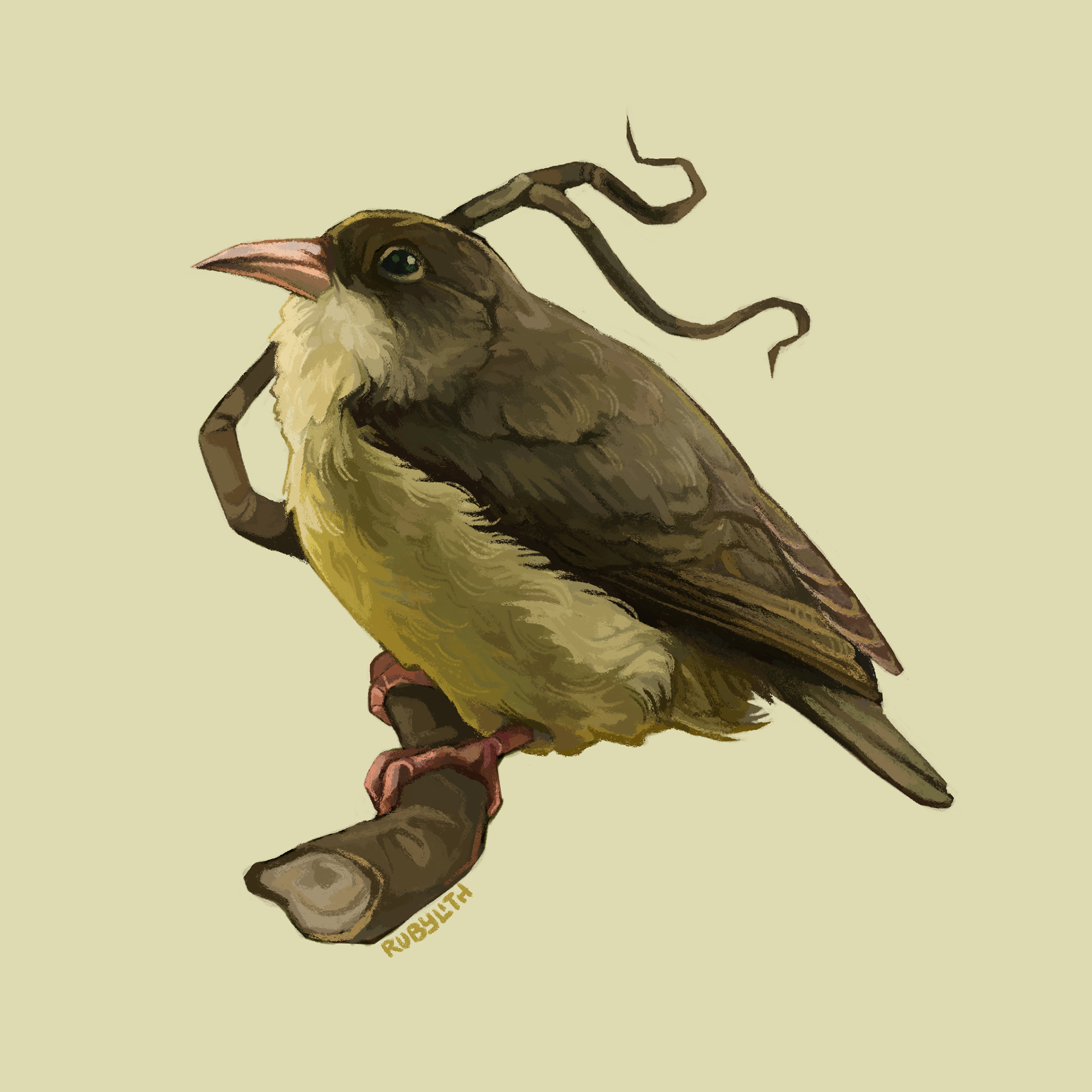
The ʻŌmaʻo or Hawaiian thrush (Myadestes obscurus) is endemic to the rainforests on the Big Island of Hawaiʻi. While their population is far more steady than many of Hawaiʻi's native birds, they are still threatened by habitat loss and invasive species.
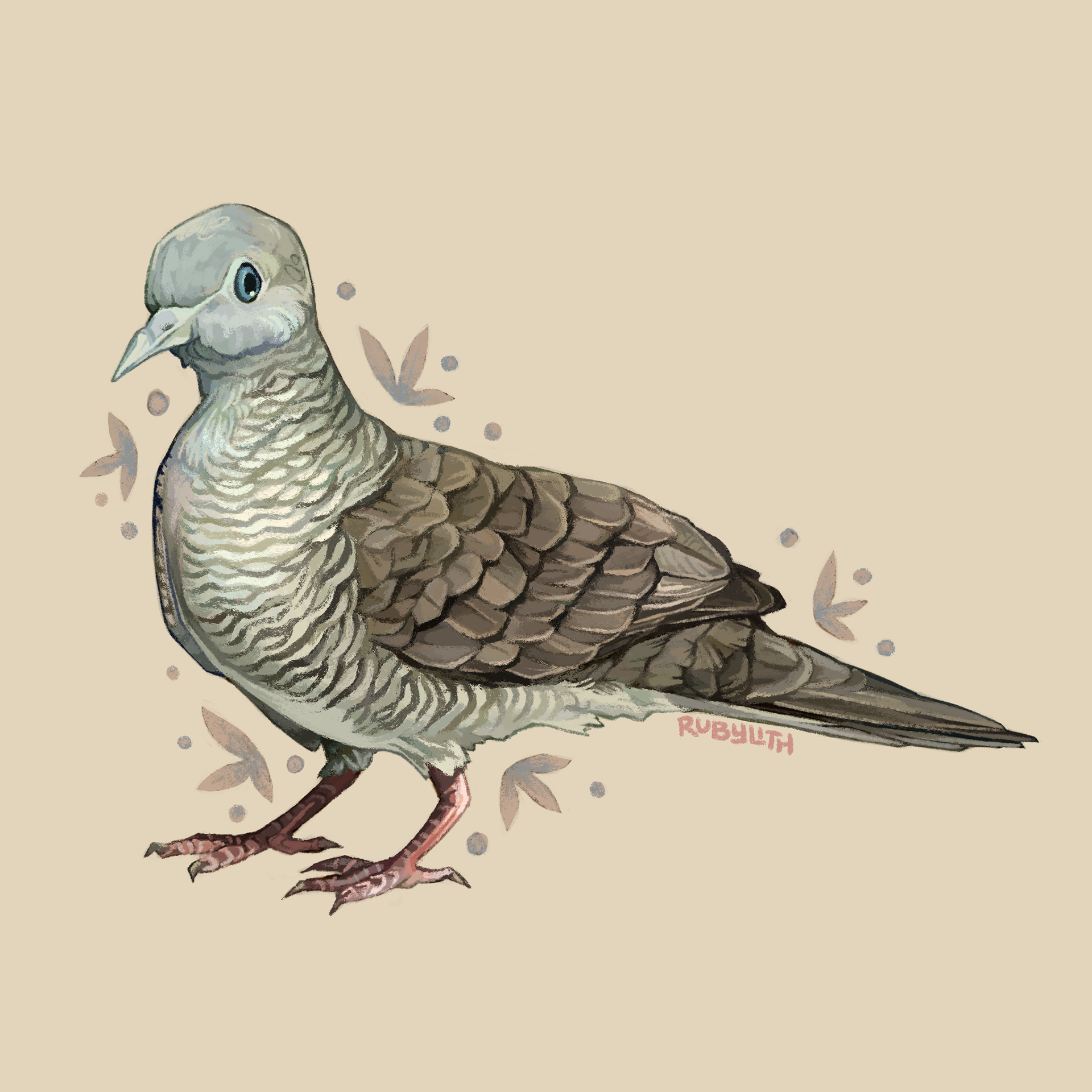
The zebra dove (Geopelia striata) is a Southeast Asian bird that was introduced to Hawaiʻi in the 1920s, due to its popularity as a captive bird. They are now one of the most abundant birds found in Hawaiʻi.
The Laysan finch (Telespiza cantans) is a finch-billed Hawaiian honeycreeper, found on the northwestern islands. Like many Honeycreepers, their population is highly endangered by a combination of avian malaria, and invasive species. At one point there were fewer than 100 left in the wild, though that number has increased with conservation efforts and the population is more stable now than it once was.
The ʻĀkohekohe (Palmeria dolei) is found on the island of Maui. Also known as the crested honeycreeper, it has striking black and red feathers, and a little tuft on the top of its head. Like many Honeycreepers, their population is highly endangered by a combination of avian malaria, invasive species, and habitat loss.
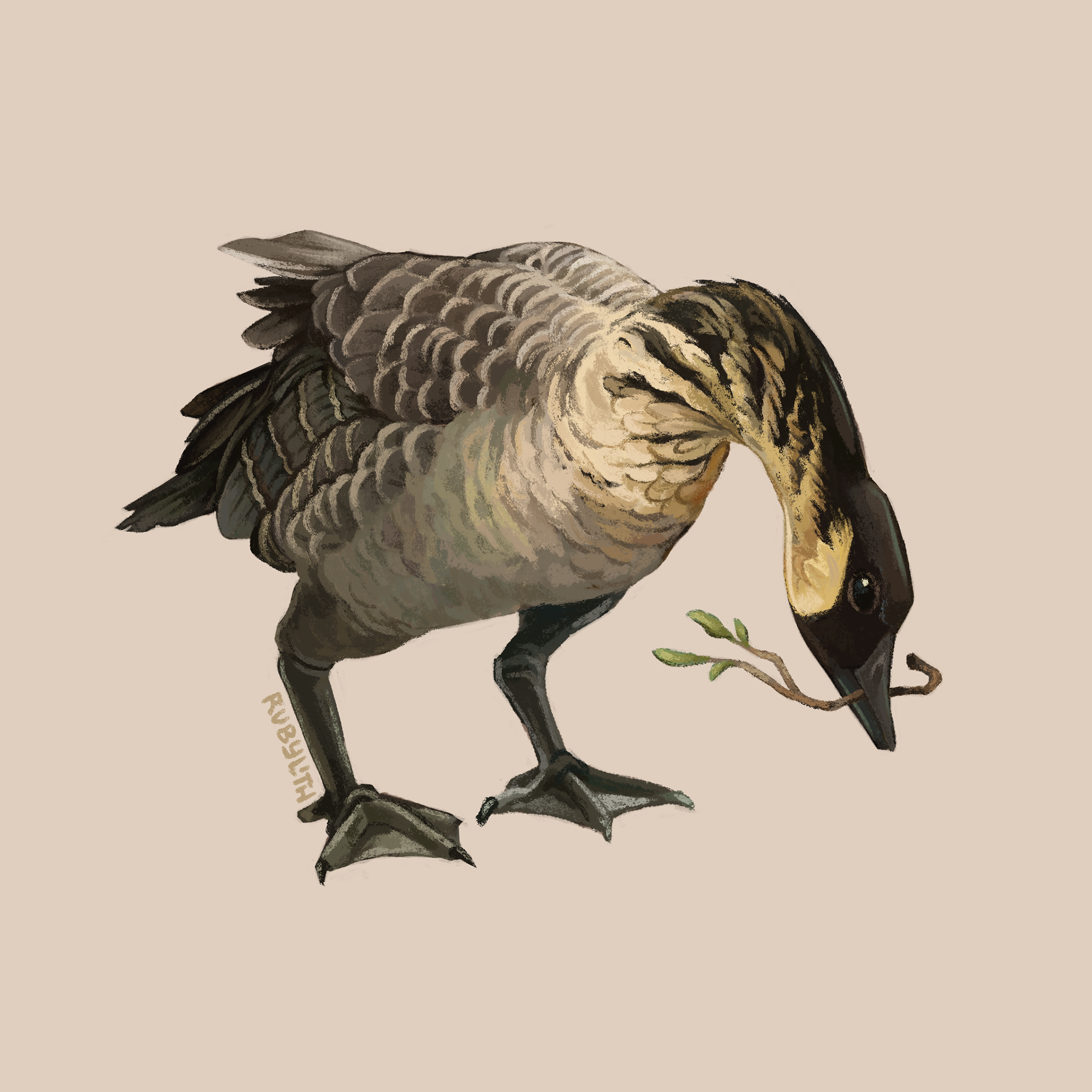
The Nēnē (Branta sandvicensis) is the state bird of Hawaiʻi! They're named after the soft bird call that they make. While they are not as endangered as many Hawaiian birds, their wild populations are only a small percentage of what they once were.
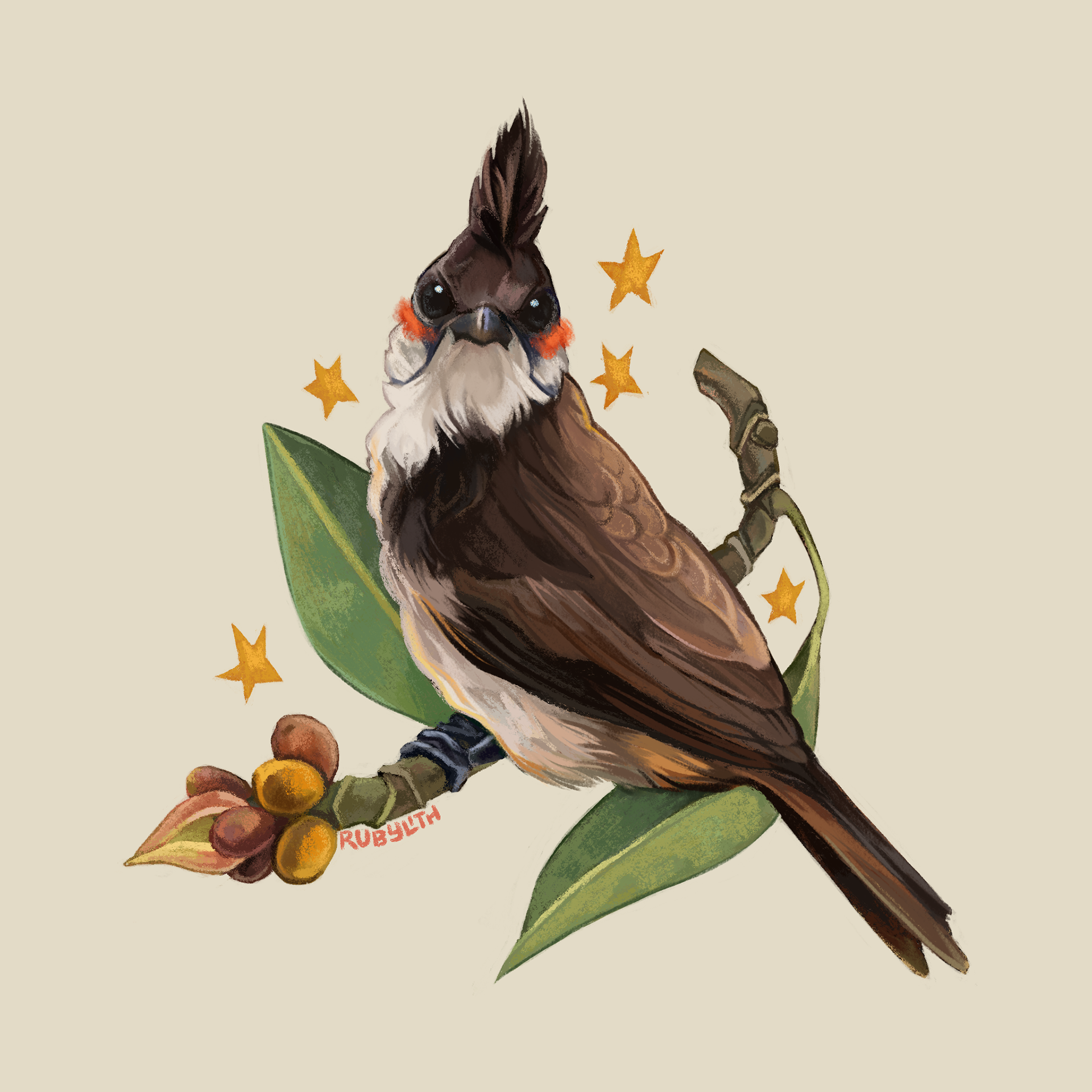
The Red-whiskered bulbul (Pycnonotus jocosus) is a small bird native to Asia, known for its rosy cheeks, the dark spur of feathers on its head, and a distinctive call. They were brought to Hawaiʻi in the 1960's as pets, and have since spread into the wild, particularly on Oahu, and are considered an invasive species on the islands.
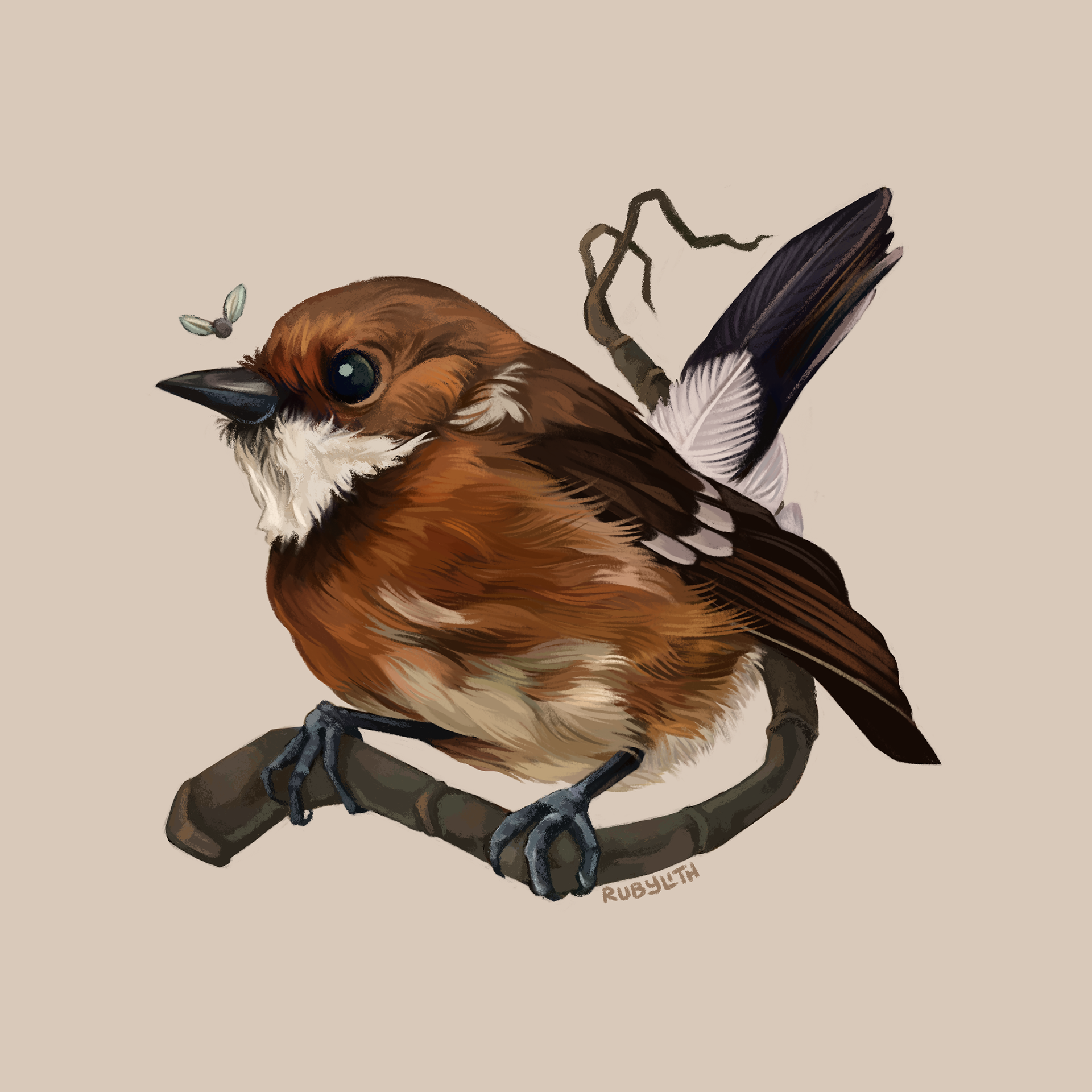
The Hawaiʻi ʻelepaio (Chasiempis sandwichensis) is a species of flycatcher found on the Big Island of Hawaiʻi. They are a small bird with a big appetite for insects and a distinctive call!
The ʻAkiapōlāʻau (Hemignathus wilsoni) is a Hawaiian Honeycreeper with a woodpecker-like beak and behavior. Like many Honeycreepers, their population is highly endangered by a combination of avian malaria, invasive species, and habitat loss.
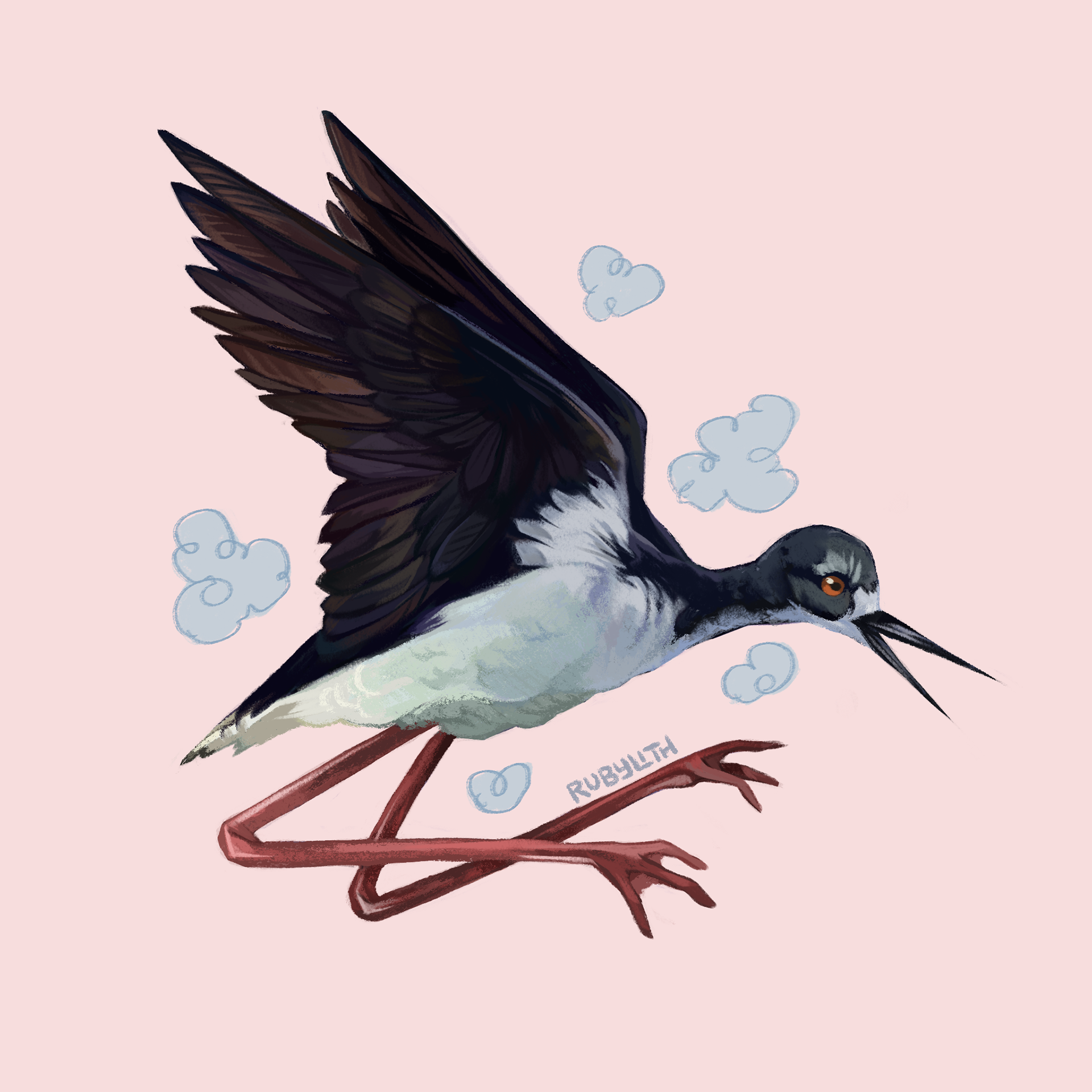
The Hawaiian stilt or aeʻo (Himantopus mexicanus knudseni) is a shorebird with extremely long legs, the second longest of any species of bird! Like many birds native to the Hawaiian islands, their population has been threatened by introduced species and habitat loss.
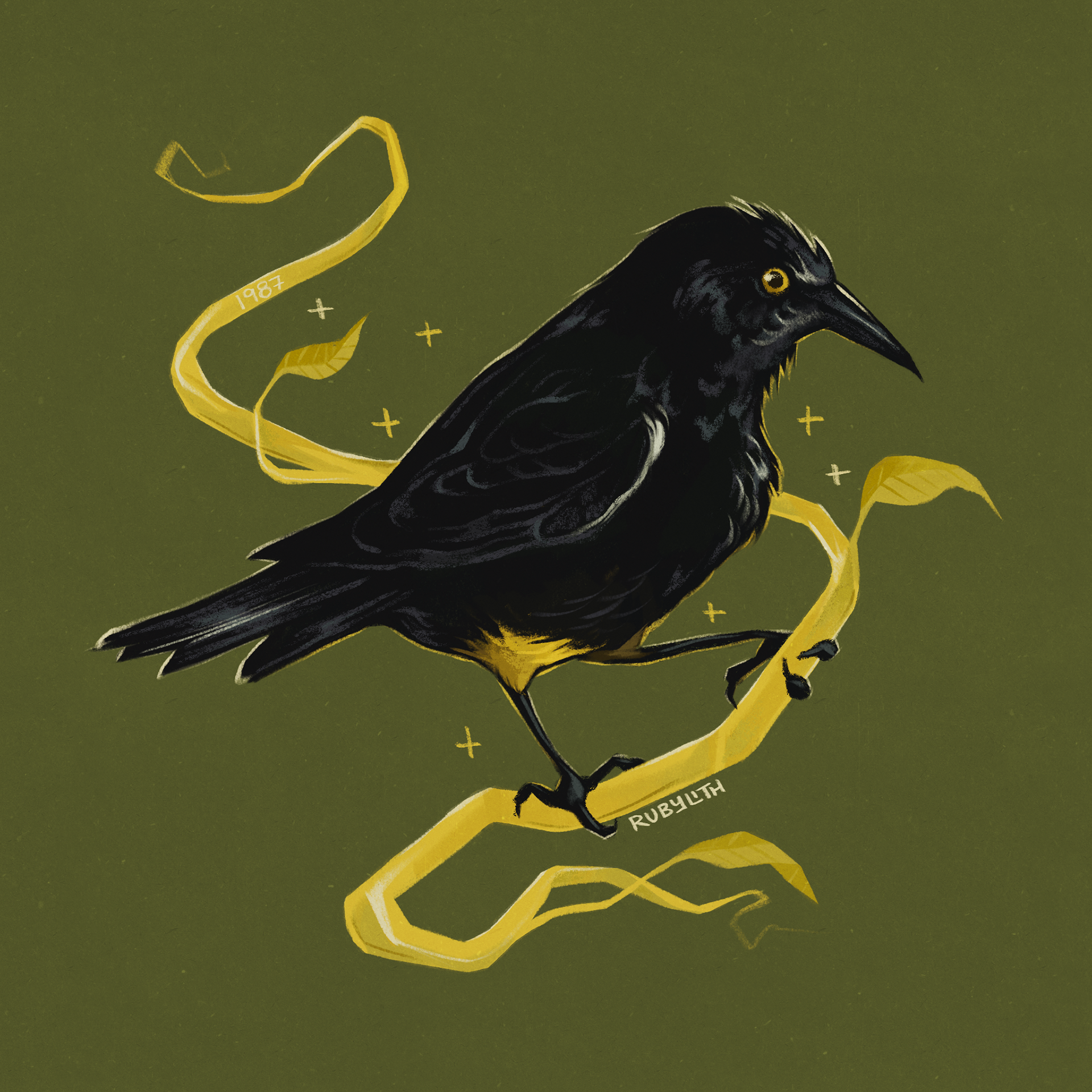
The Kauaʻi ʻōʻō, or ʻōʻōʻāʻā (Moho braccatus) was last observed in 1987, and was declared extinct in 2023. It was the last extant member of the Mohoidae family of birds. The introduction of invasive predators, avian malaria, multiple bad hurricanes, and habitat loss led to its extinction. In 1987 a final recording of a lone male calling out was made, never to find a mate.
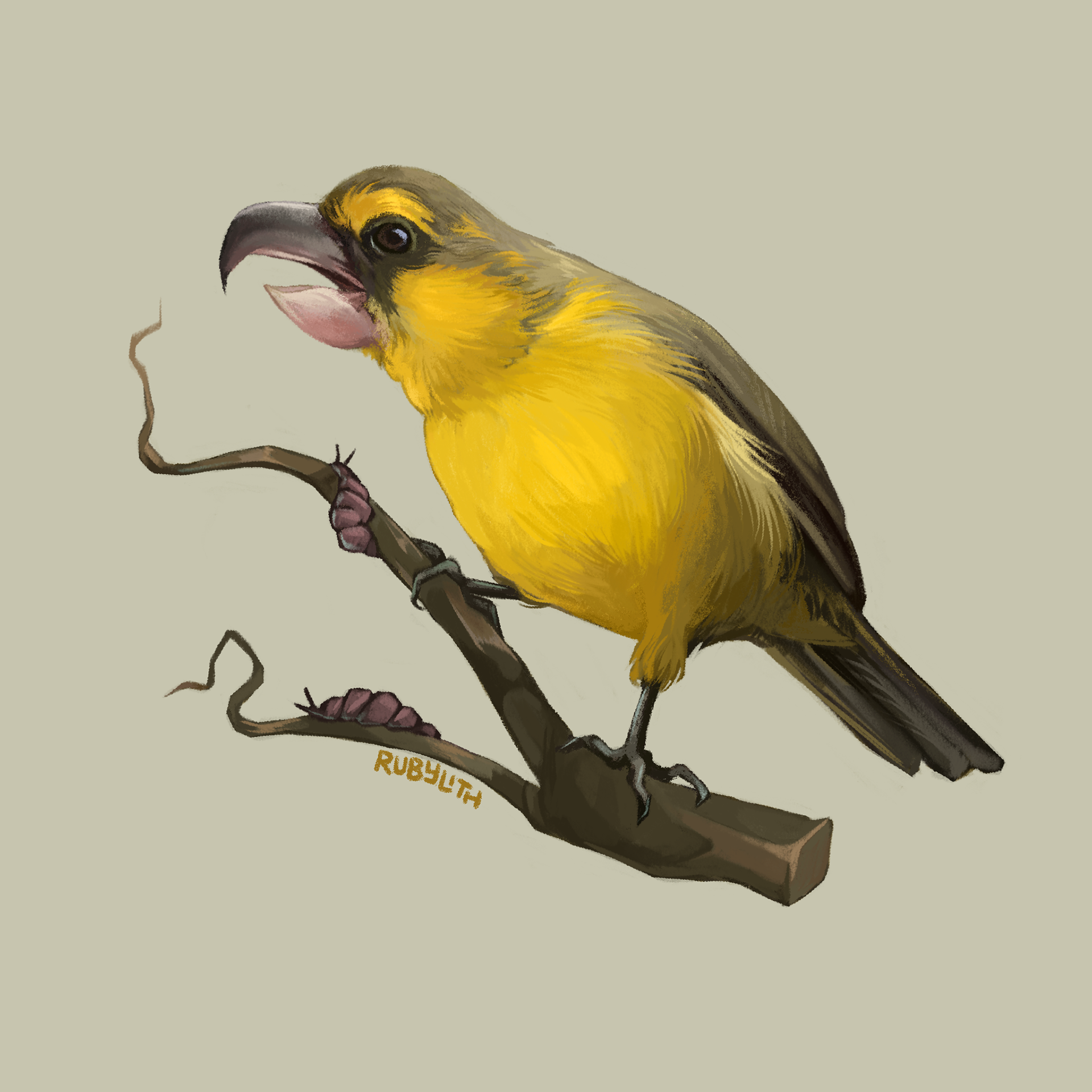
The Kiwikiu (Pseudonestor xanthophrys) is a species of Hawaiian Honeycreeper found on Maui. They use their powerful beak to remove bark from trees to snack on the insects underneath. Like many Honeycreepers, their population is highly endangered by a combination of avian malaria, predation from invasive species, and habitat loss.
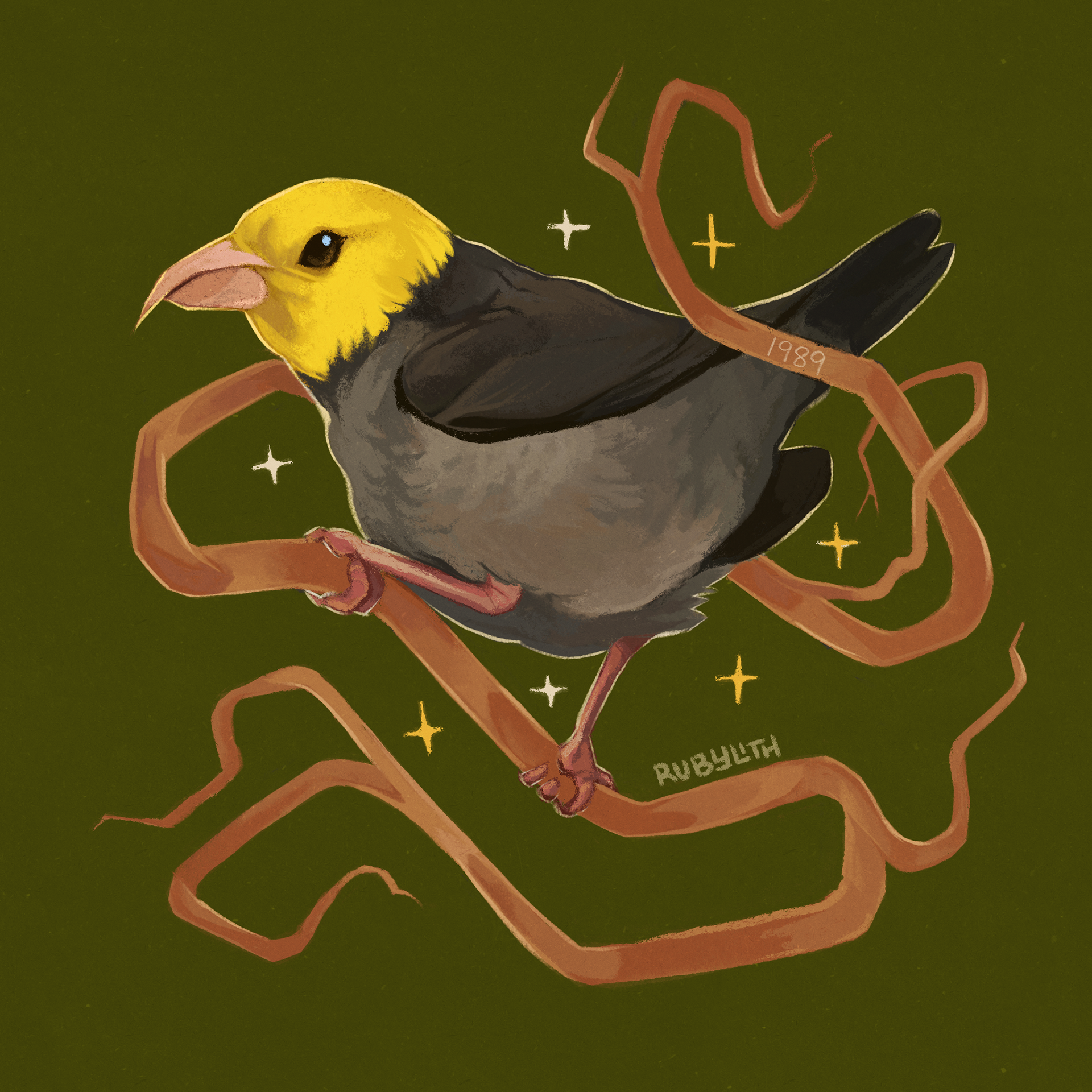
The ʻŌʻū (Psittirostra psittacea) was a Hawaiian Honeycreeper that was endemic to the Hawaiian islands. It was last spotted in 1989, and was declared extinct in 2024. Like many Honeycreepers, their populations declined due to a combination of avian malaria and habitat loss.
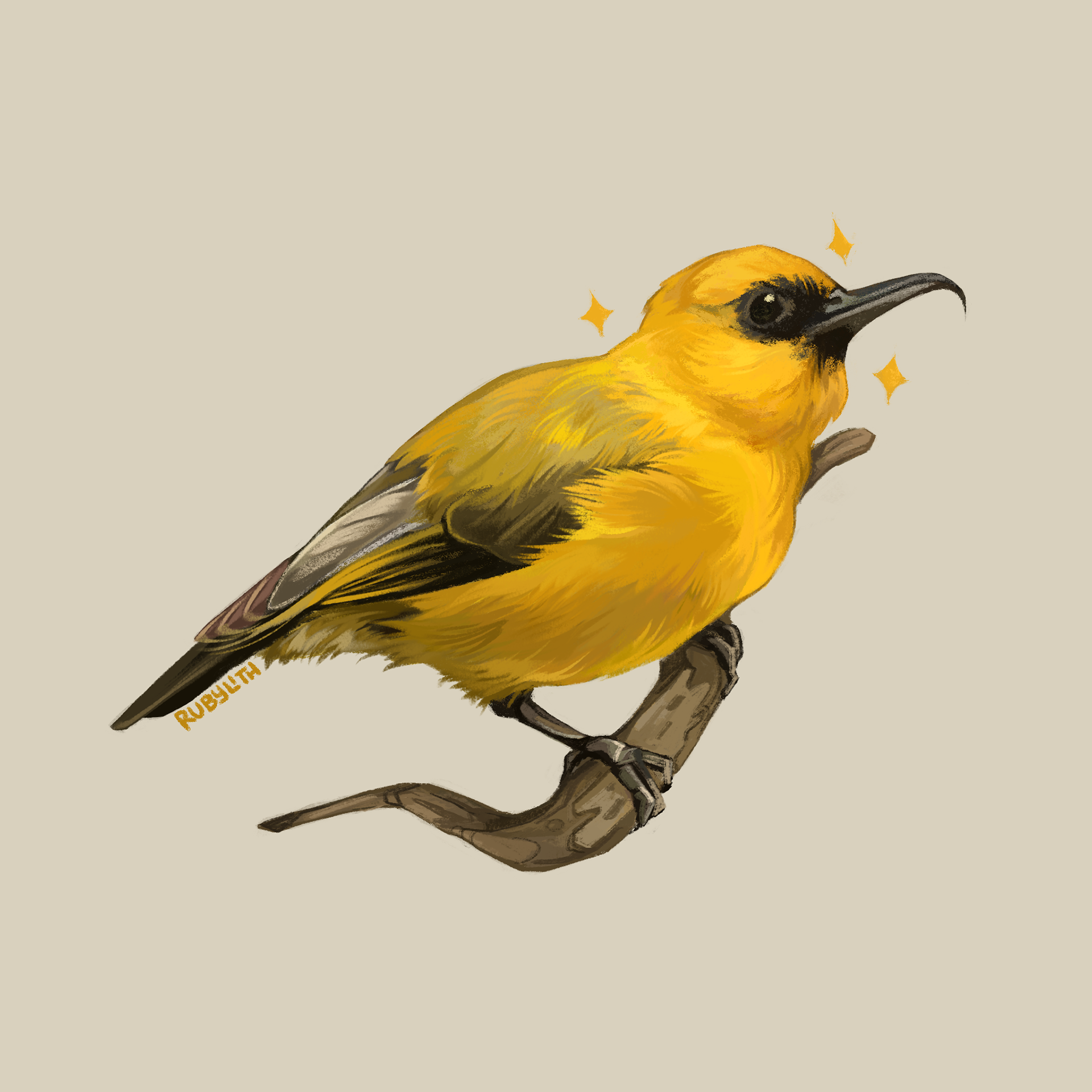
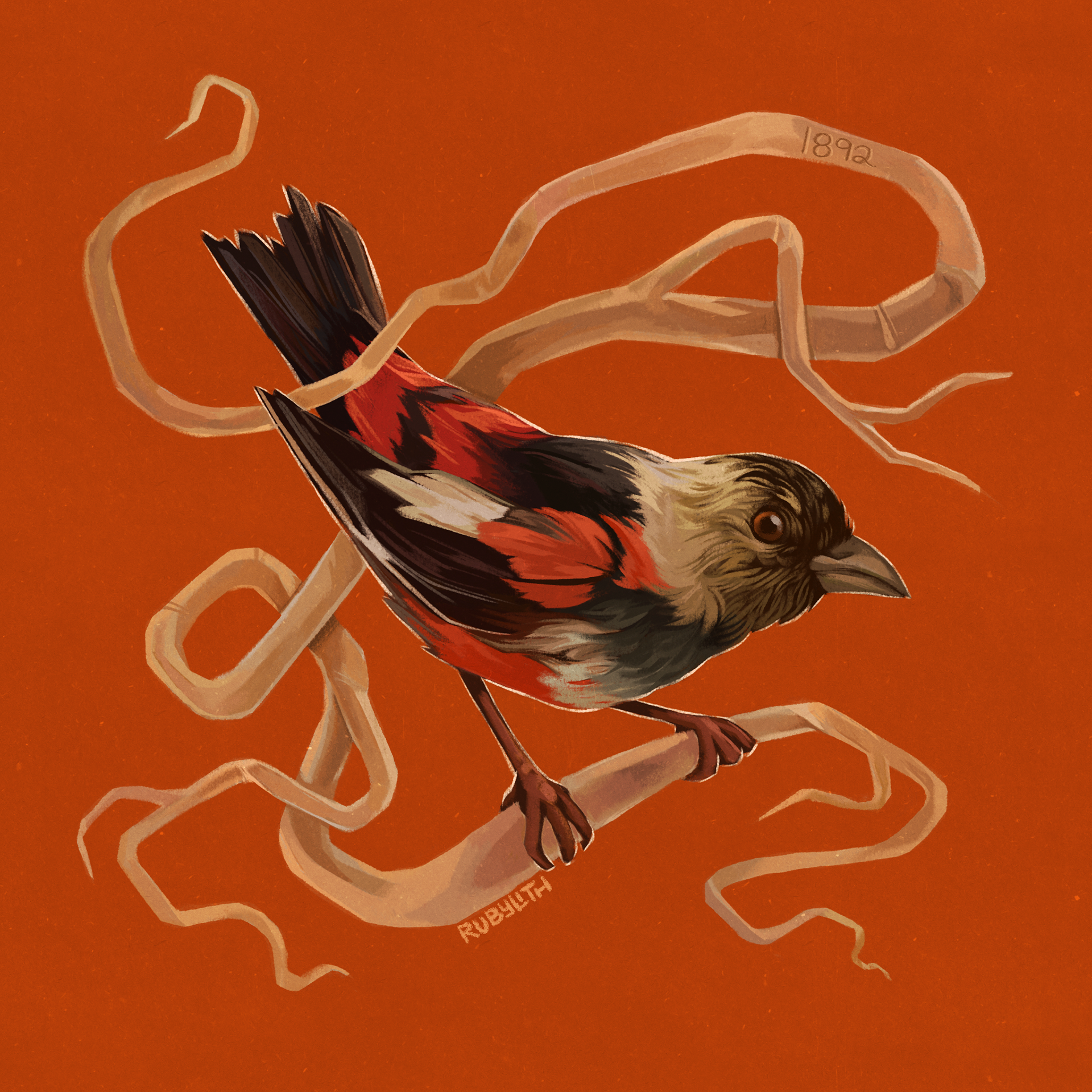
The ʻUla-ʻai-hāwane (Ciridops anna) was a Hawaiian Honeycreeper that lived in the forested mountains on the big island of Hawaiʻi. It has been extinct since 1892. Not much is known about the bird—There are only 5 surviving museum specimens of this bird, and a few 19th-early 20th century renderings of it, most of which were made after the bird was already gone.
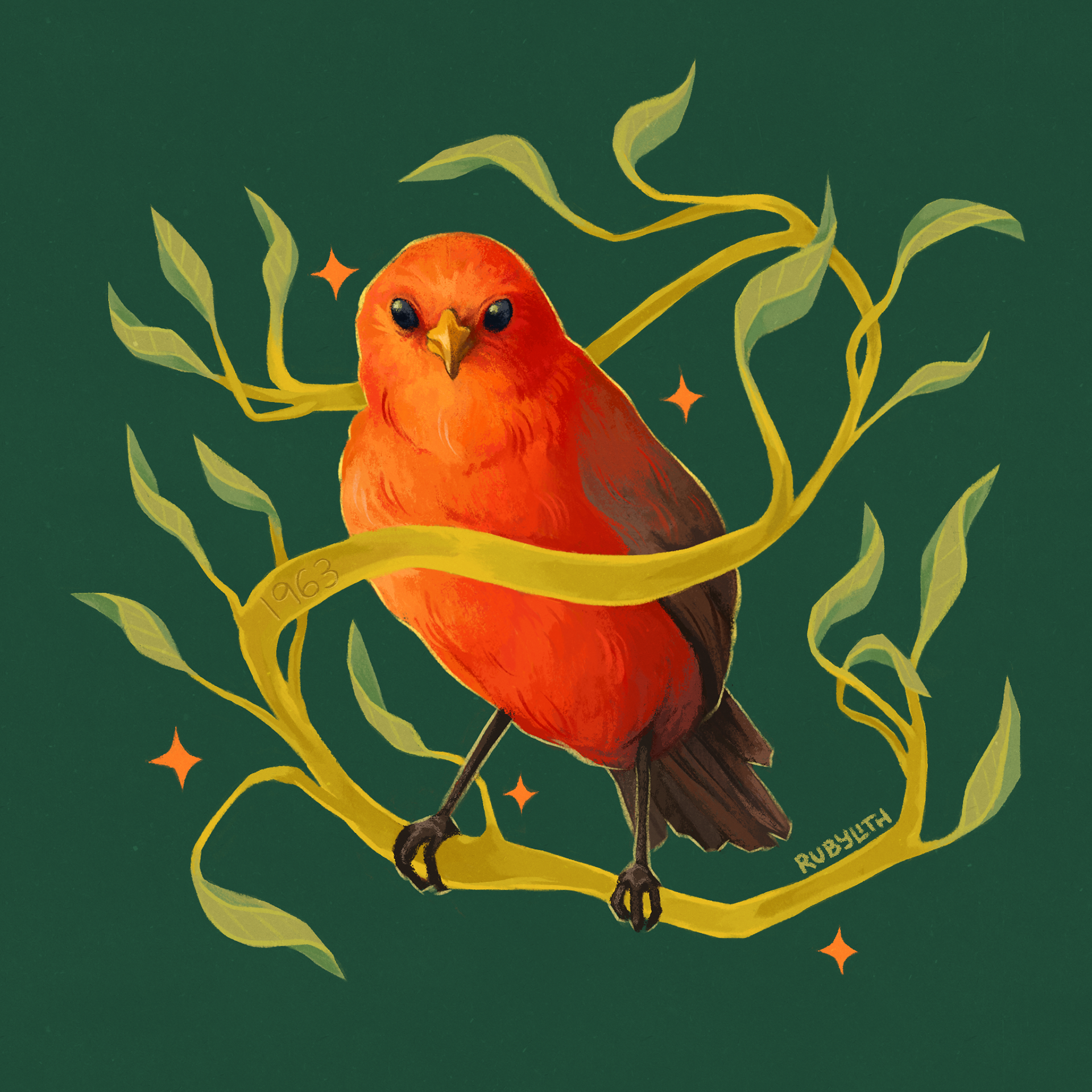
The Kākāwahie (Paroreomyza flammea) was last seen in 1963, and declared extinct in 2023. It was a species of Hawaiian Honeycreeper found on Molokaʻi, known for the male birds' bright red feathers. Like many Honeycreepers, their populations declined due to a combination of avian malaria and habitat loss.
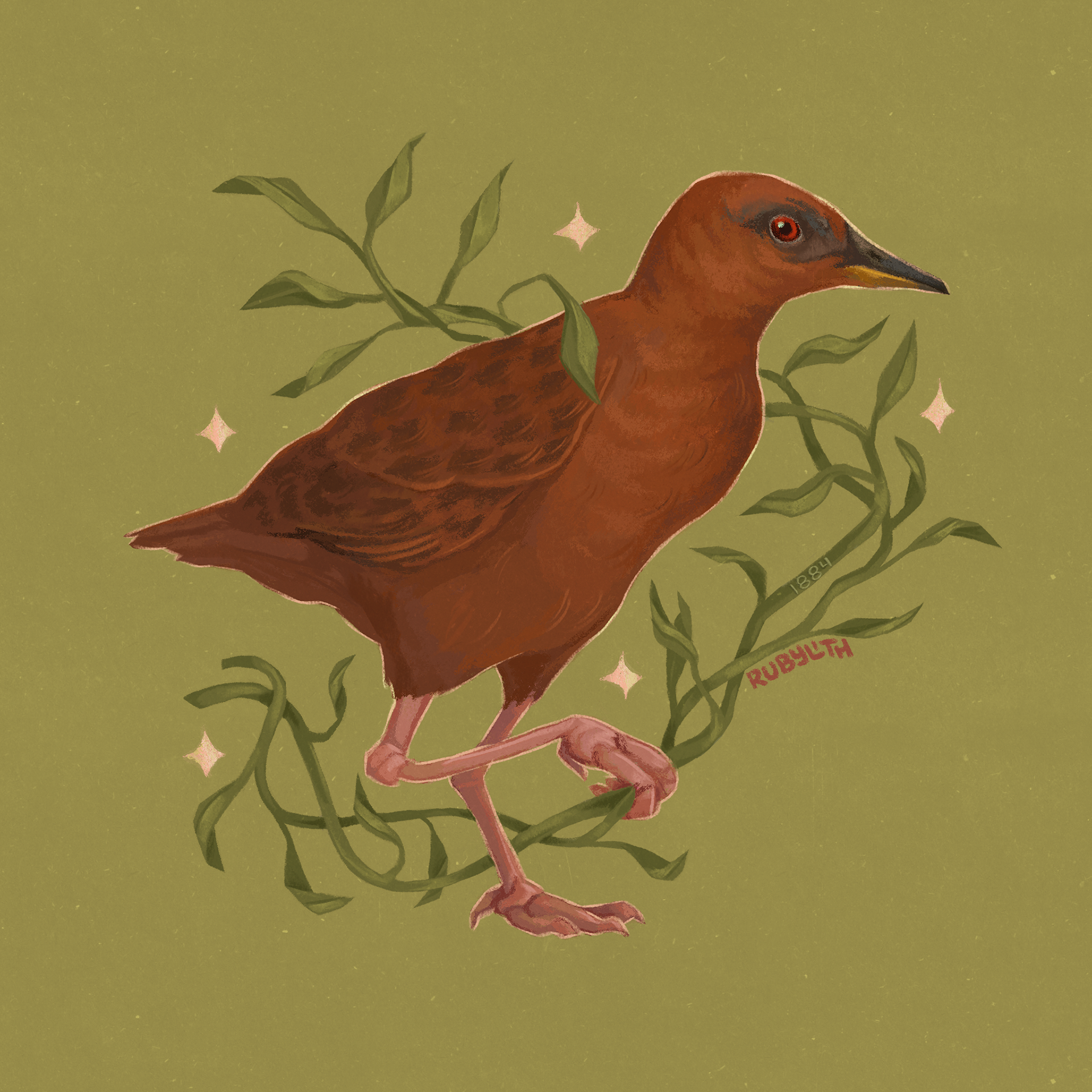
The Hawaiian Rail (Zapornia sandwichensis) was last seen in 1884, and has been considered extinct since then. This bird had two types, one with dark and one with light feathers (this drawing shows the light form).
The ʻAkikiki or Kauaʻi creeper (Oreomystis bairdi) is a Hawaiian honeycreeper endemic to Kauaʻi. As of 2024, it is thought to be extinct in the wild, with less than 50 individuals in captivity. Like many Honeycreepers, this has been caused by a combination of avian malaria, invasive species, and habitat loss. There is hope of reintroducing the birds back to the wild once the mosquito population has been controlled using Wolbachia, a bacteria that reduces the population of disease-carrying mosquitos.
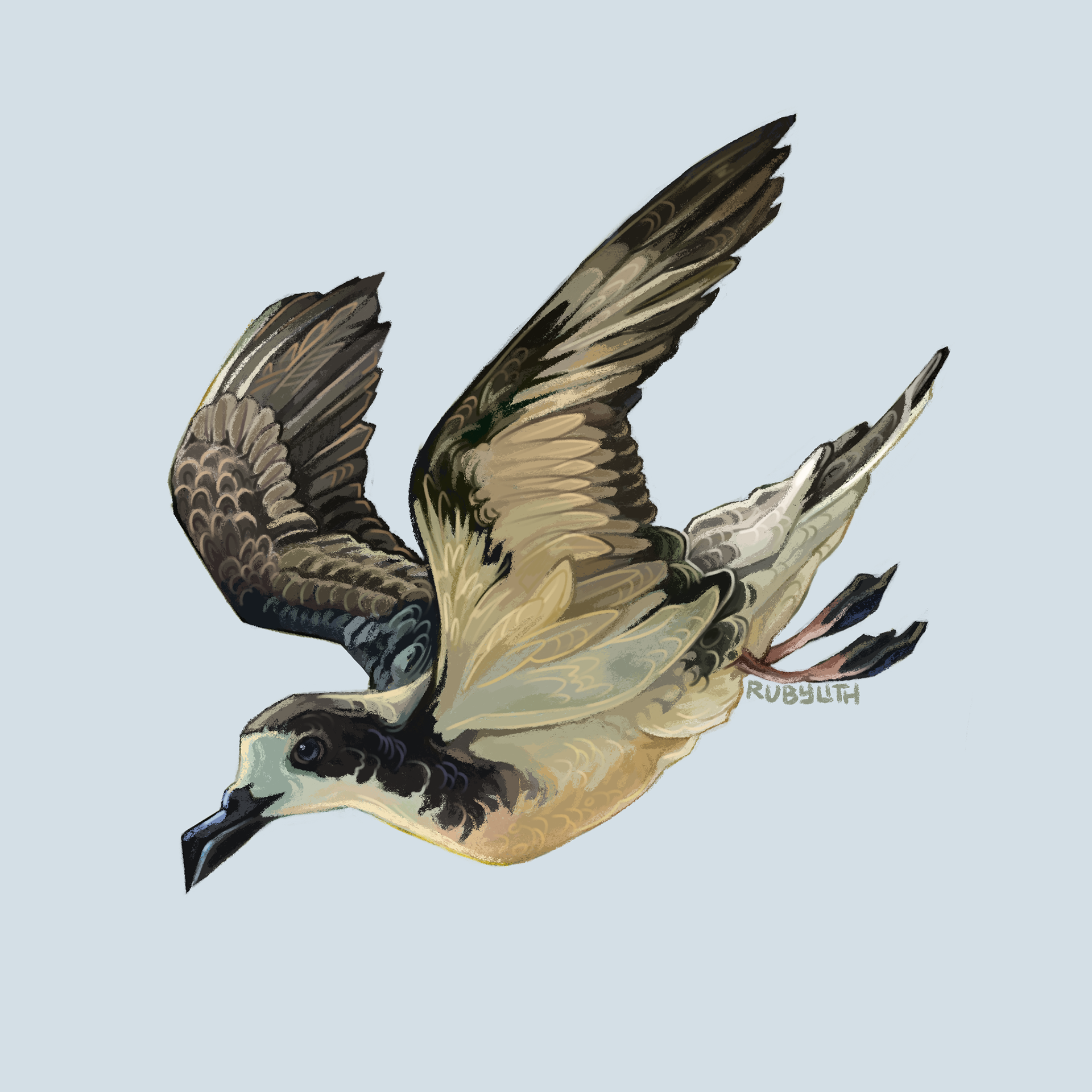
The ʻUaʻu or Hawaiian petrel (Pterodroma sandwichensis) is a large seabird endemic to Hawaiʻi. Recent studies have shown that on some of their trips out to sea, they have actually made it as far north as the Aleutian Islands in Alaska! Their population is endangered due to habitat loss. light pollution, and invasive species that feed on their young.
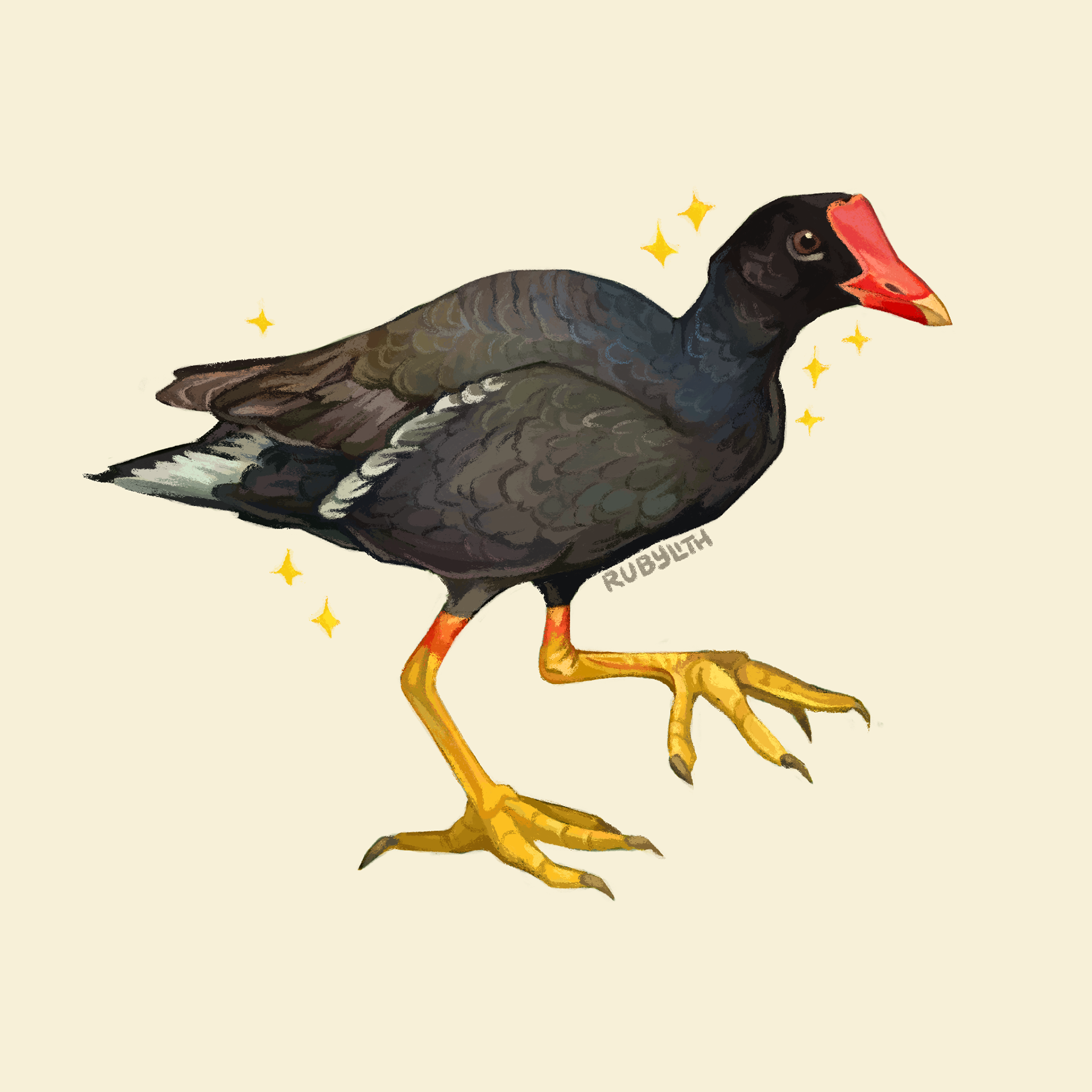
The ʻAlae ʻUla or Hawaiian Gallinule (Gallinula galeata sandvicensis) is a wetland bird with a striking red shield on its head. In Hawaiian mythology, the ʻAlae ʻUla was the fire keeper for the gods that brought the knowledge to humans, and its red shield is a scorch mark from the fire. Their population was incredibly small in the mid-20th century, with some success in restoration since then, though they are still threatened by invasive species and poaching.
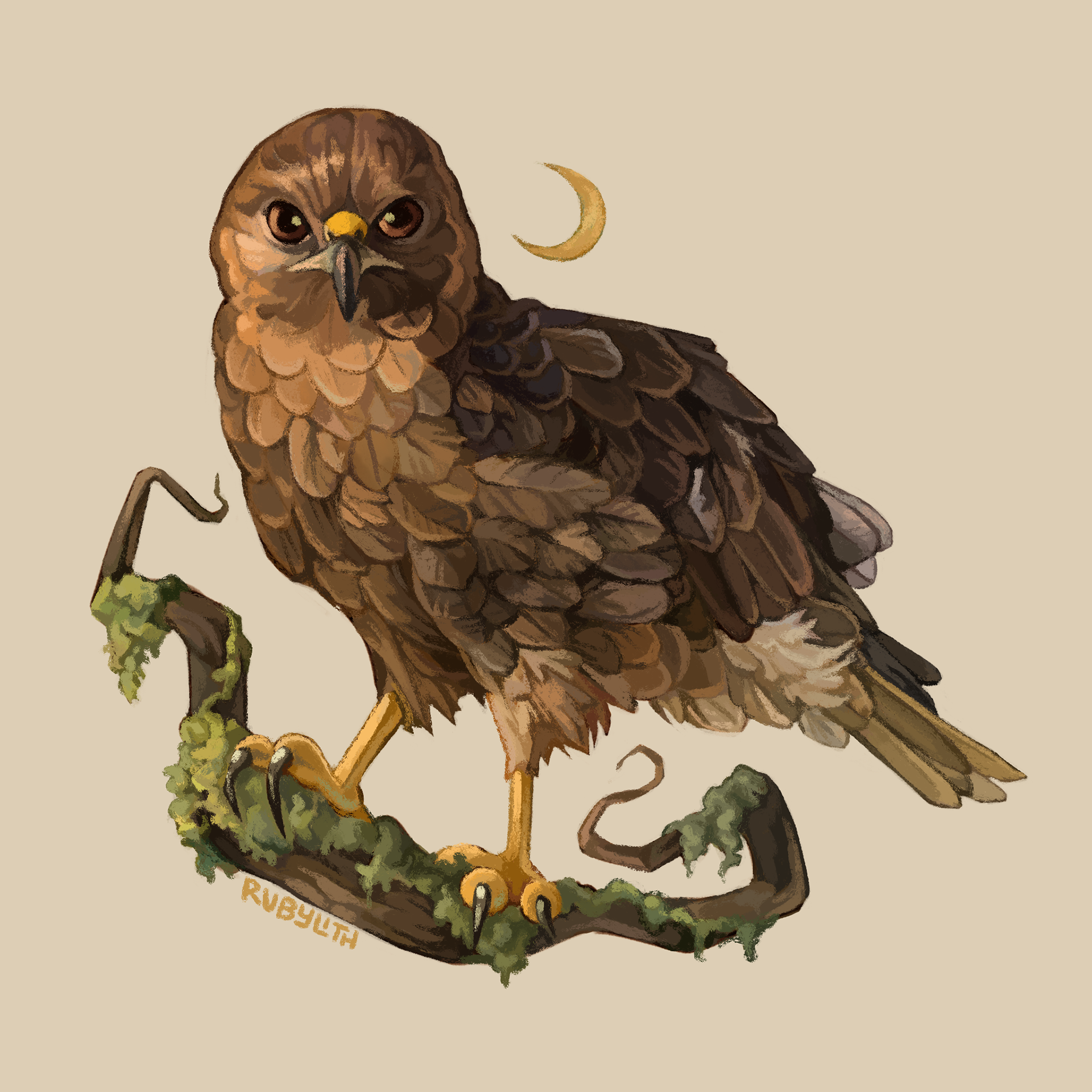
The ʻIo or Hawaiian Hawk (Buteo solitarius) is a raptor endemic to Hawaiʻi, and one of only two native birds of prey to the Hawaiian islands, the other being the Pueo. The hawks have two distinct color phases, a dark (depicted in this art), and a light phase where their underbelly is lighter.
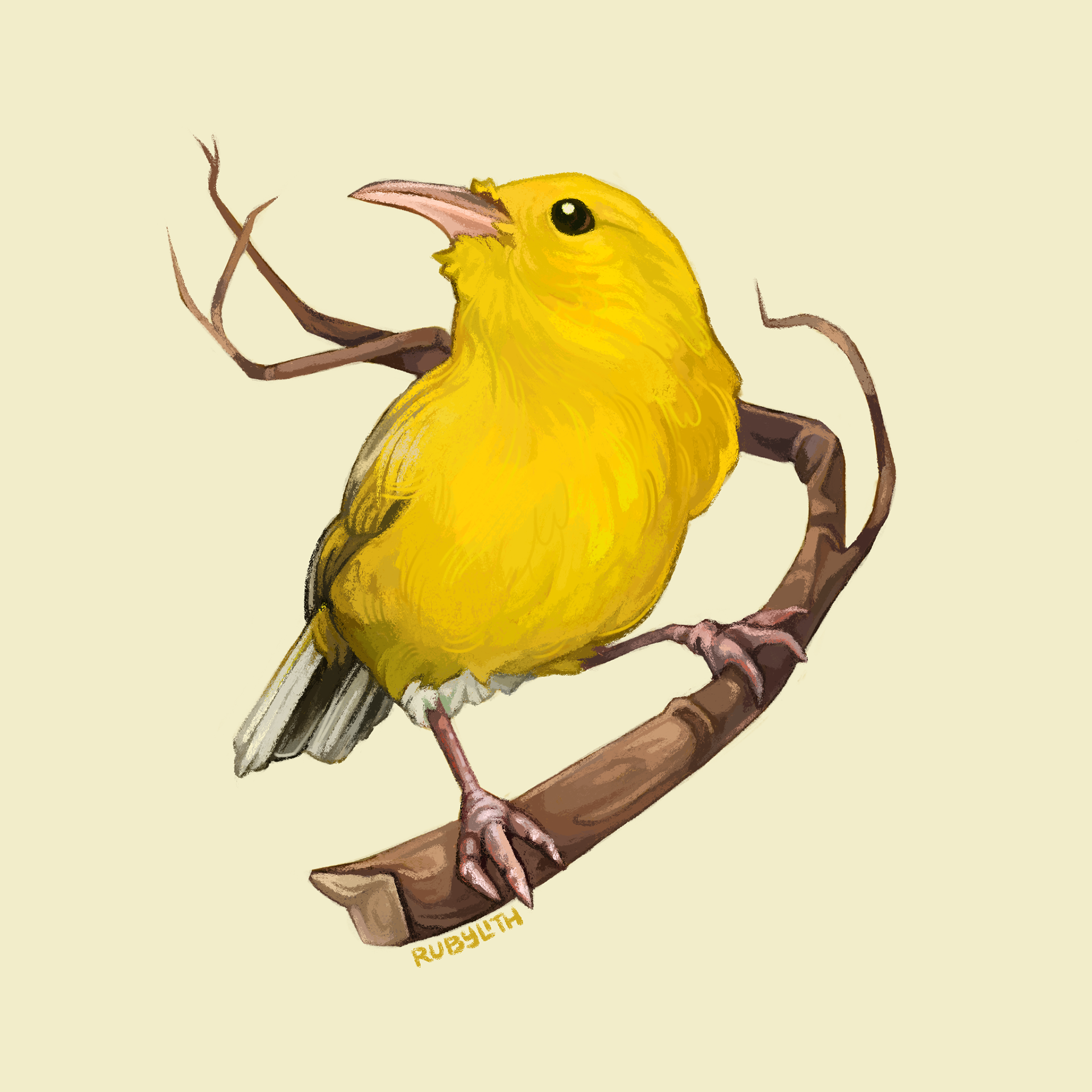
The 'Anianiau is a Hawaiian honeycreeper that is endemic to the island of Kaua'i. Like many Honeycreepers, their population is highly endangered by a combination of avian malaria, invasive species, and habitat loss.
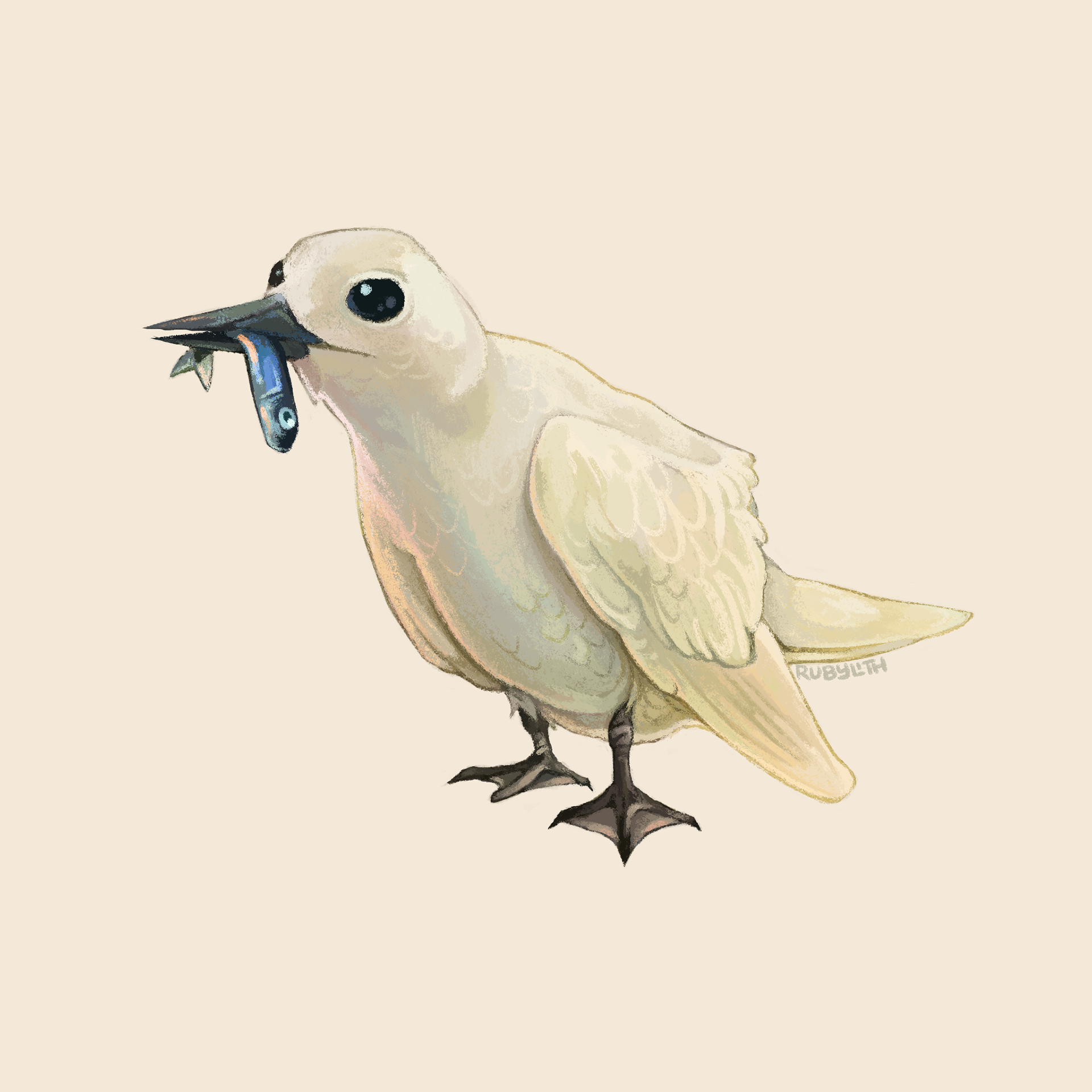
The Manu-o-Kū or white tern (Gygis alba) is a small seabird found across tropical oceans around the world. They lay their eggs in the crooks of thin branches without a nest, which comes with the benefit of reducing nest parasites, but does make the eggs and chicks much more susceptible to becoming dislodged. They are the official bird of Honolulu.
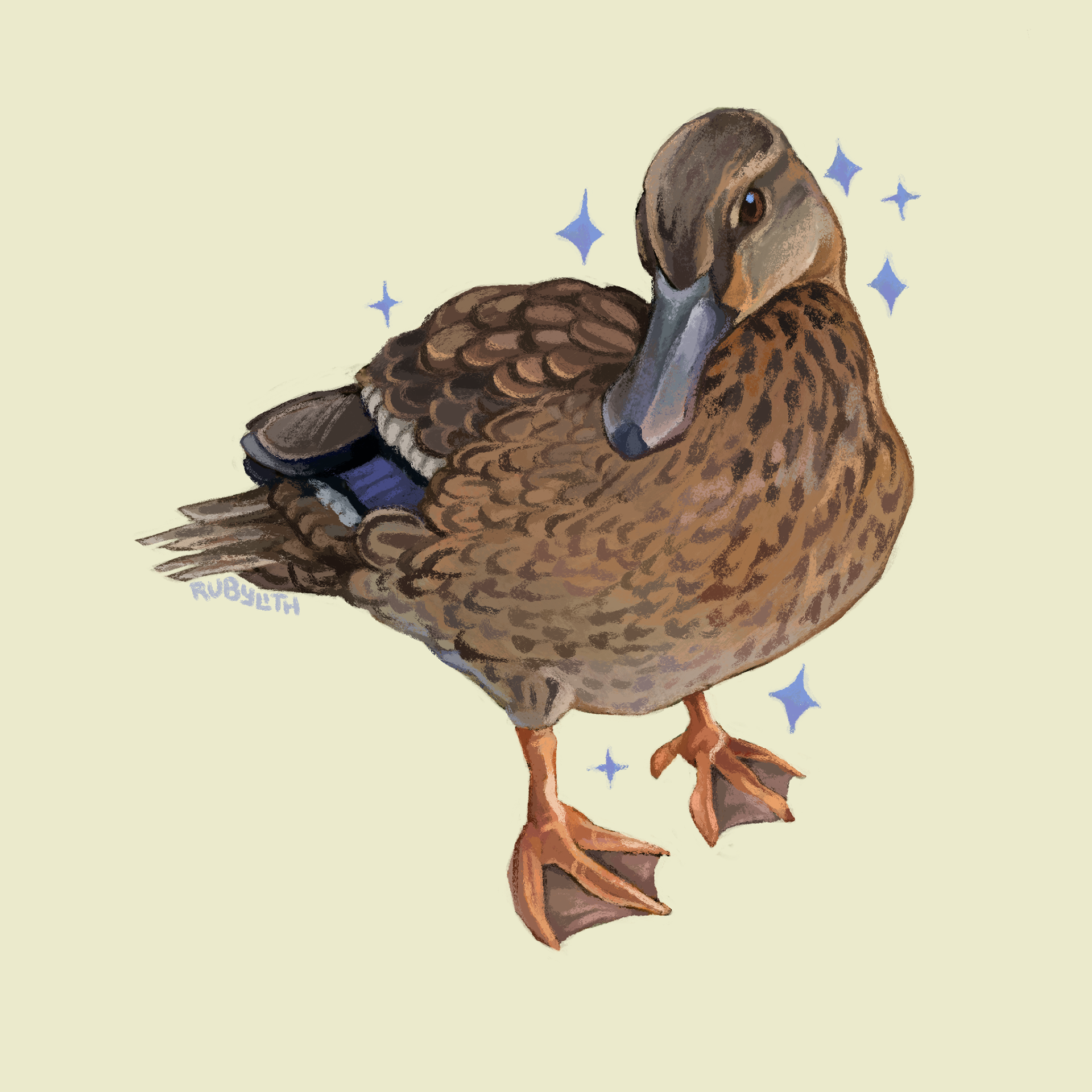
The Koloa Maoli or Hawaiian Duck (Anas wyvilliana) is a species of duck endemic to the largest Hawaiian islands. It looks similar to a mallard, but unlike its relative, the male and female ducks look nearly identical, both looking similar to a female mallard. Their interbreeding with the introduced mallard population has led to a lot of hybridization, which is the leading cause of their endangerment, and it also seems that the hybrid ducks do not do as well on the island as the native ducks do. Conservation efforts to remove male mallards (which are the easiest to identify) are underway.
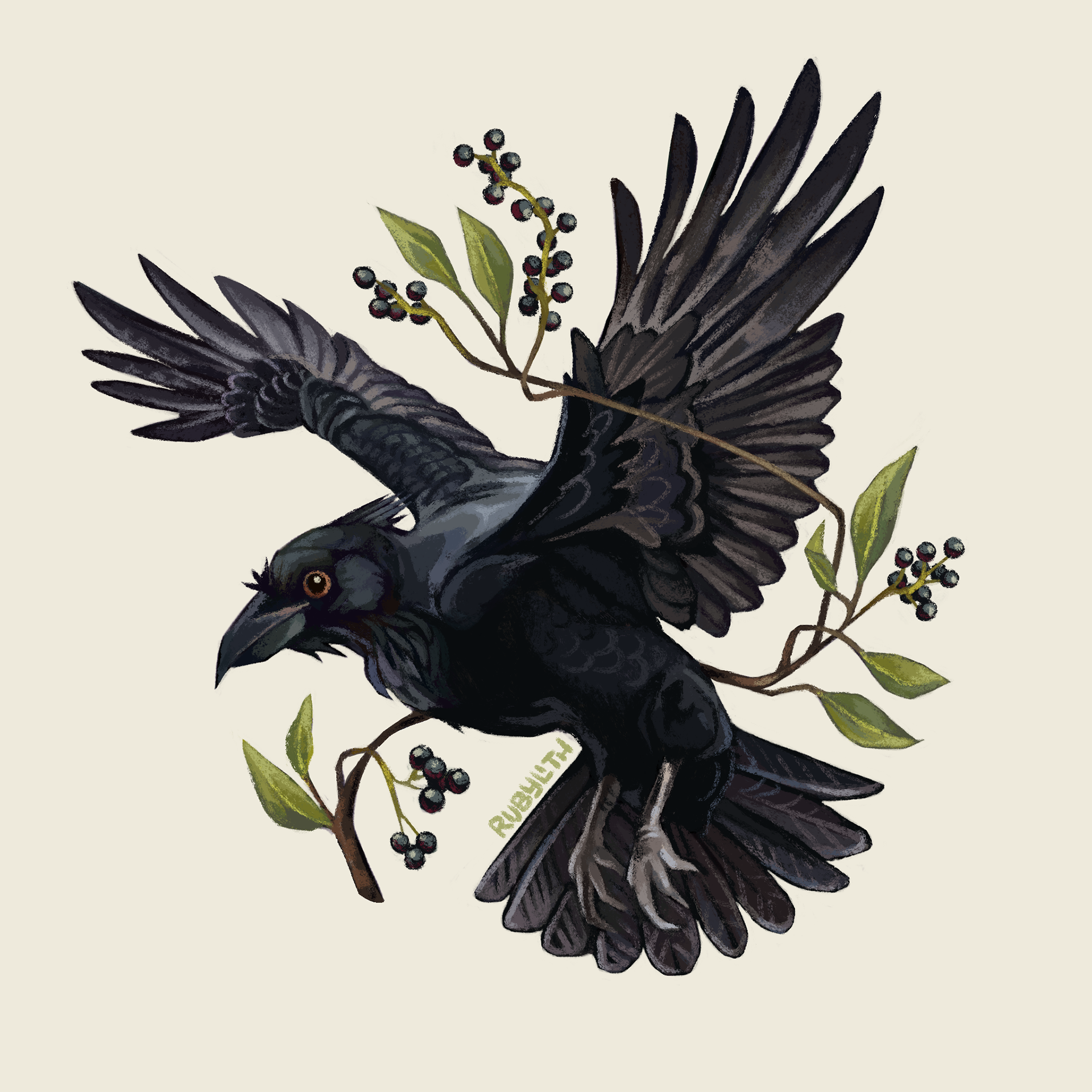
The ʻAlalā or Hawaiian crow (Corvus hawaiiensis), pictured here with an ʻōlapa branch, is currently extinct in the wild, though breeding programs in San Diego hope to one day reintroduce the species into the wild. In Hawaiian mythology, the ʻAlalā leads souls to their final resting place on the cliffs of Ka Lae.
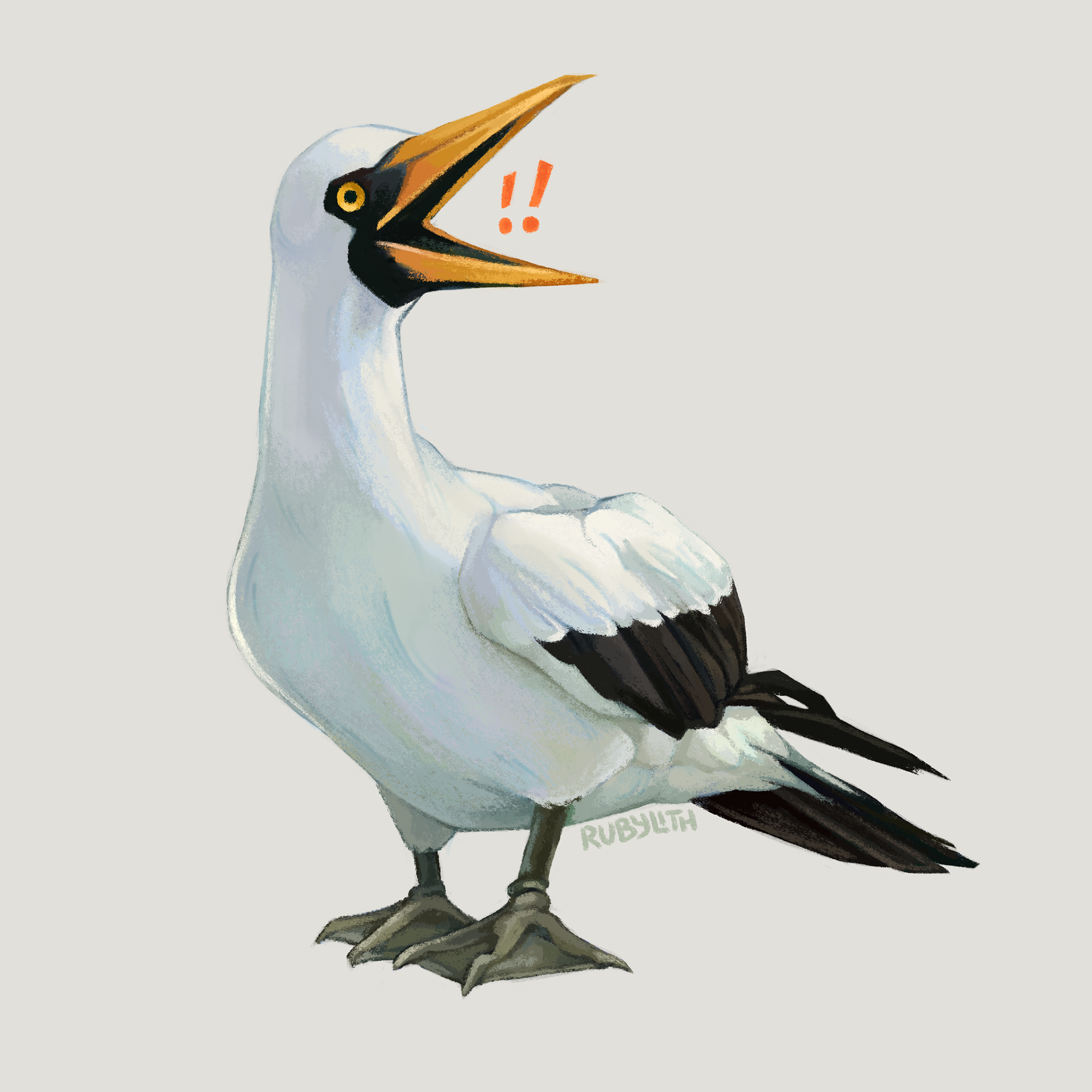
The Masked Booby (Sula dactylatra) is a large seabird found across the earth's tropical oceans. They nest on atolls in large colonies, and feed on flying fish. While they are not considered endangered, their populations are declining due to habitat changes, pollution, and climate change.
The ʻApapane (Himatione sanguinea) is a small Hawaiian Honeycreeper endemic to many of the Hawaiian Islands. While they are threatened by invasive species and habitat loss, the birds thrive at a high enough altitude that they have not been decimated by avian malaria like most honeycreepers have, and there is some evidence that they may even be becoming resistant to malaria.
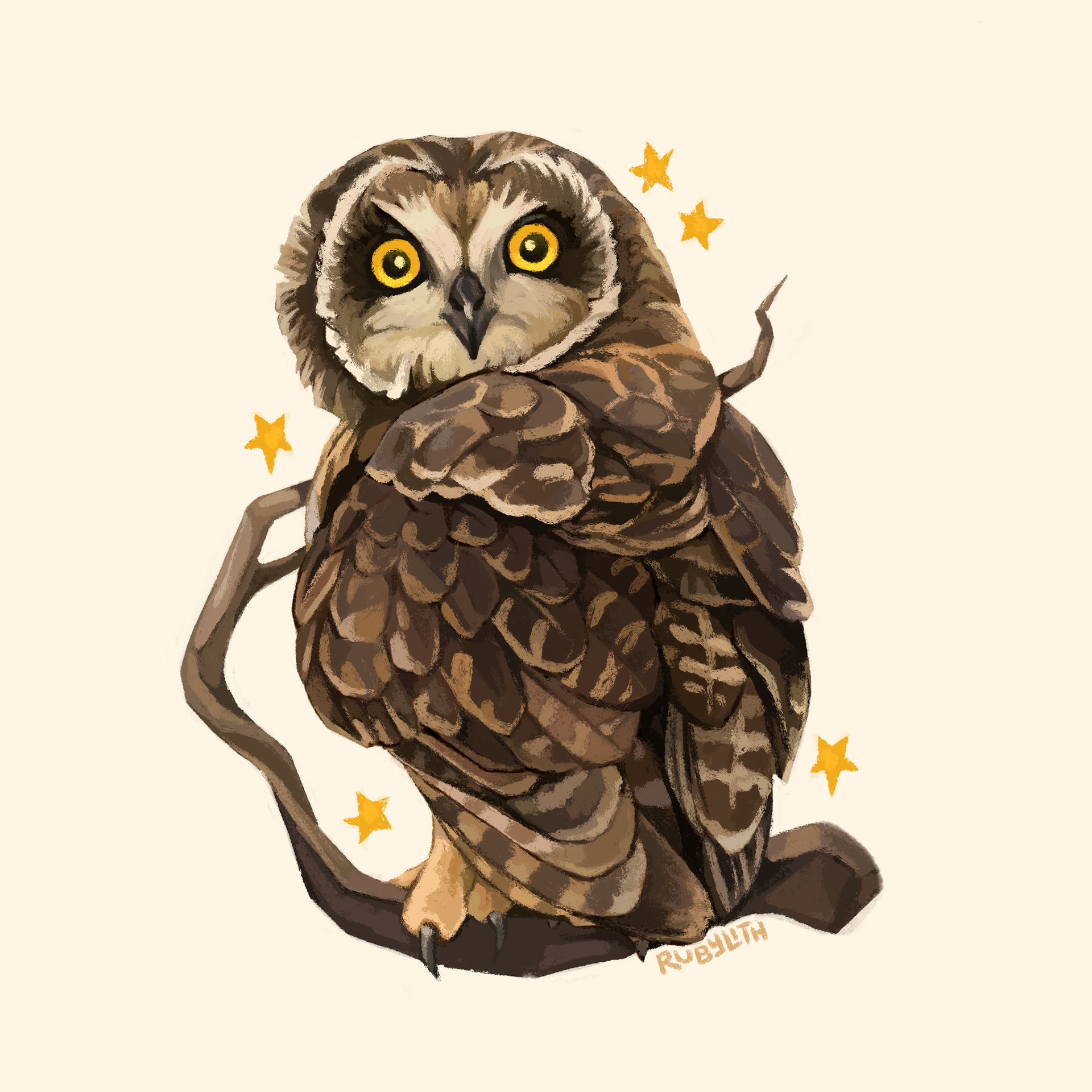
The Pueo (Asio flammeus sandwichensis) is a subspecies of short-eared owl that has lived in Hawai’i for a very long time, but is actually not native in the traditional sense: it was brought to the islands by the arrival of Polynesians, potentially attracted by the rats that were also brought over on the boats. Nevertheless they are now considered endemic to the island and a protected animal, and is an important animal in Hawaiian mythology.
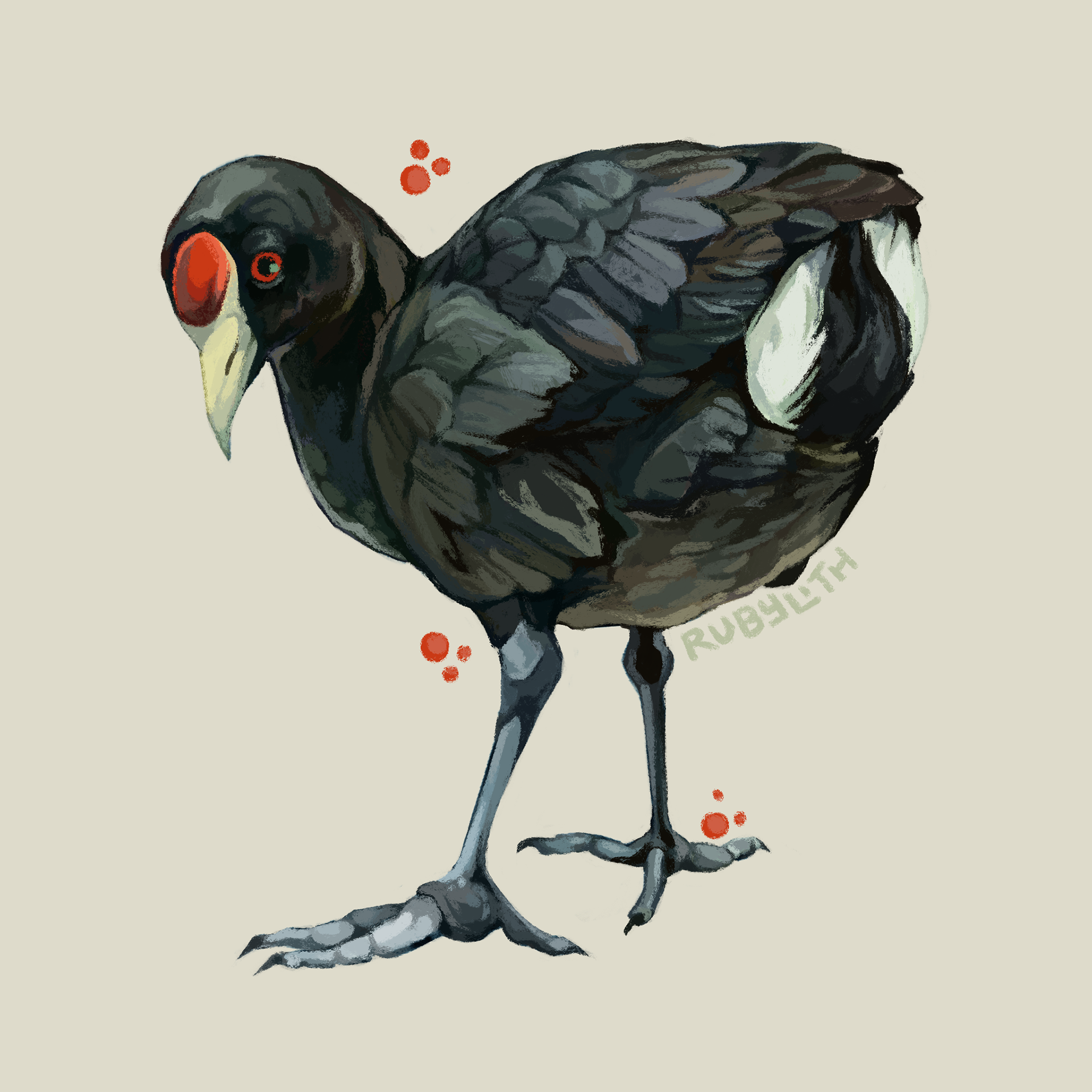
The ʻAlae keʻokeʻo or Hawaiian Coot (Fulica alai) is a striking black waterbird. While it is depicted here with a red spot on its frontal shield, the species more often has a fully white face and forehead. The population of birds is relatively stable, though more wetland management and conservation is needed to be confident in the ʻAlae keʻokeʻo's long term survival.
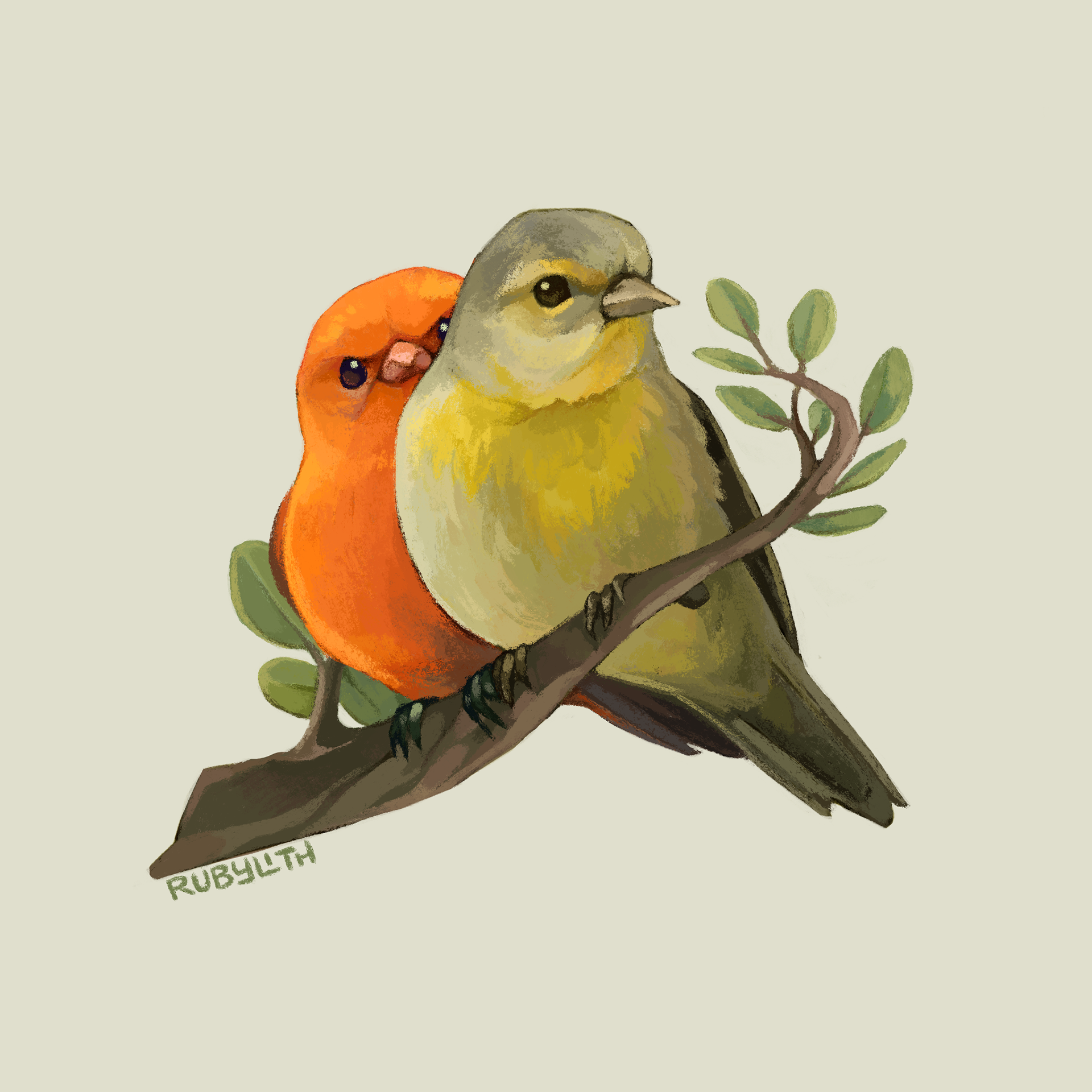
The Hawaiʻi ʻākepa (Loxops coccineus) is one of 3 species of ʻākepa, a small genus of birds within the larger honeycreeper group. The male birds are a striking shade of orange, while the females are a soft greyish yellow. Like many Honeycreepers, their population is highly endangered by a combination of avian malaria, invasive species, and habitat loss.
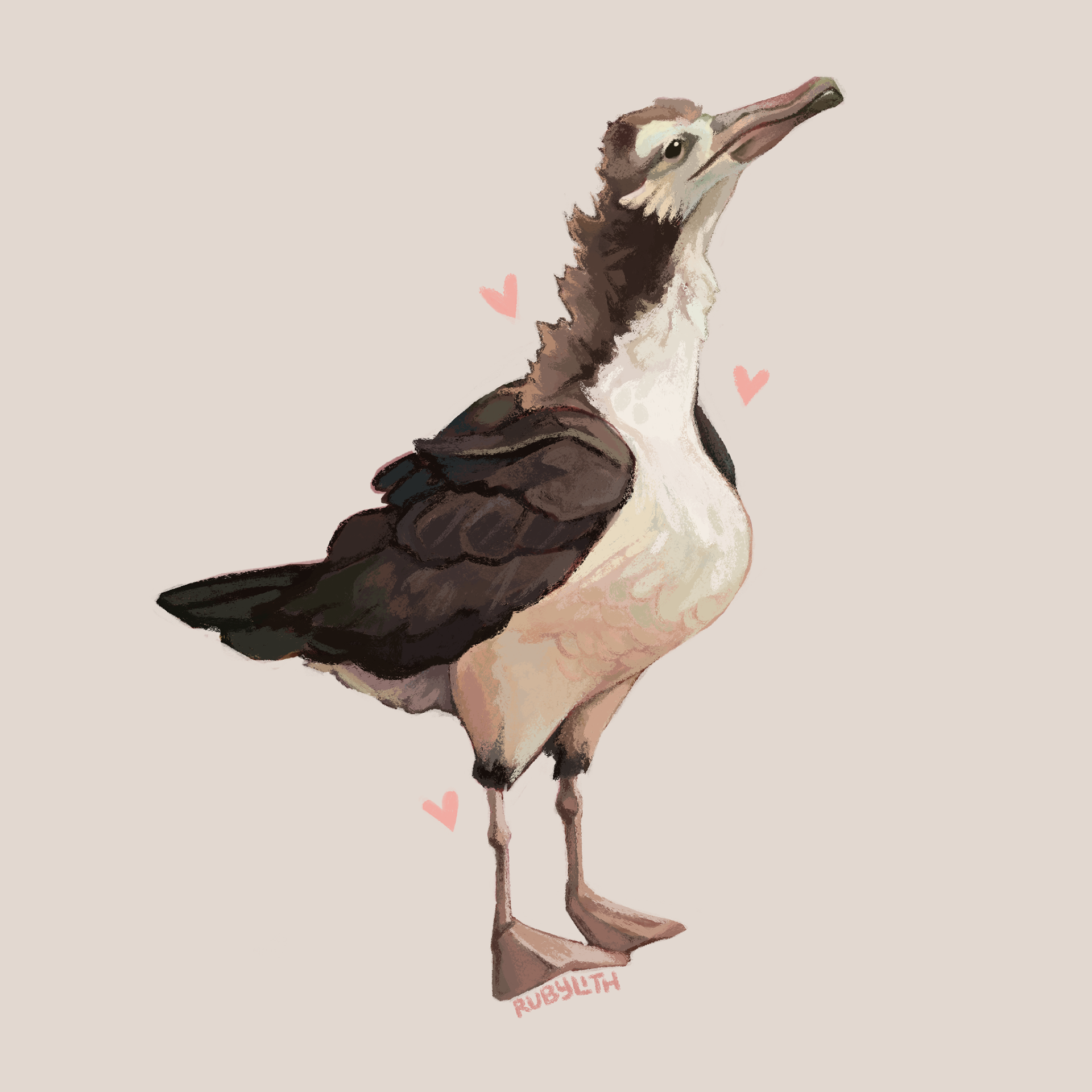
The Laysan Albatross (Phoebastria immutabilis) is a large seabird that traverses the northern pacific ocean, with nearly its entire population calling the small chain of northwestern Hawaiian islands their home. This drawing depicts a juvenile albatross that is still molting some of his feathers.